
Article: Can Infrared Spectroscopy Reveal Whether a Sapphire Has Been Heat-Treated?


Can Infrared Spectroscopy Reveal Whether a Sapphire Has Been Heat-Treated?
A sapphire's beauty is immediately visible. Its treatment history, however, may require considerably more sophisticated investigation.
Heat treatment is widely used in the gemstone industry to modify the colour or clarity of corundum, the mineral family that includes ruby and sapphire. While the resulting stones can be beautiful, understanding whether a gemstone has been treated is an important part of evaluating its characteristics and disclosing its history.
One of the tools gemologists use is Fourier-transform infrared spectroscopy (FTIR), which measures how a gemstone absorbs infrared radiation. Within these spectra, a feature known as the 3161 cm⁻¹ infrared band has attracted particular attention because it can provide evidence about a sapphire's thermal history.
Research published in Gems & Gemology by the Gemological Institute of America (GIA) investigates how this feature behaves when natural corundum from different geographic deposits is heated under controlled conditions.
The findings reveal an important distinction: although the 3161 cm⁻¹ band can be a valuable diagnostic clue, its behaviour depends on temperature and potentially on the geological history of the gemstone. Interpreting it correctly requires more than simply checking whether the band is present or absent.
1. Understanding the 3161 cm⁻¹ Infrared Band
The 3161 cm⁻¹ band is an absorption feature observed in natural corundum of different colours, particularly yellow sapphire.
It is frequently used as supporting evidence when assessing whether a sapphire has remained untreated at high temperatures. However, its precise microscopic origin is not yet fully understood.
One proposed explanation connects the feature to the stretching vibrations of hydroxyl groups within the corundum structure. These groups may be associated with hydrogen ions that compensate for differences in electrical charge when iron ions substitute for aluminium in the crystal lattice.
The 3161 cm⁻¹ feature can also appear alongside several weaker bands, collectively described as the 3161 cm⁻¹ series. These include features near 3355, 3242, 3100, 2460 and 2420 cm⁻¹.
For a gemologist, these signals form part of a broader infrared fingerprint. Their positions and intensities can help reveal information about a gemstone's internal structure and thermal history.
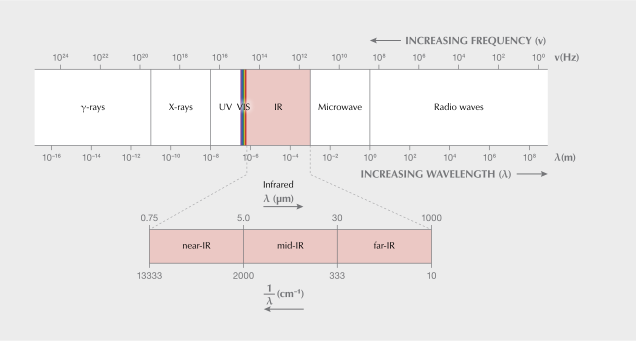
To understand the significance of this technique, it helps to consider the broader applications of infrared spectroscopy in gemology, including the identification of gemstone characteristics and certain treatment-related features.
2. What Happens When Sapphire Is Heated?
Heat treatment can change the appearance of corundum by modifying its colour and, in some cases, its clarity. The outcome depends on factors including the gemstone's chemical composition, its original characteristics, the temperature reached, the duration of heating and the furnace atmosphere.
Previous research had already established that the 3161 cm⁻¹ band could behave differently at different temperatures.
At approximately 700°C, its intensity may remain largely unchanged. At temperatures around 900°C and above, it may disappear or become substantially weaker.
The newer GIA experiment investigated what happens in the intermediate temperature range.
The experimental approach
Researchers selected ten untreated natural corundum samples from GIA's coloured-stone reference collection. The samples represented different colours and came from four countries:
-
Madagascar
-
Myanmar
-
Sri Lanka
-
Mozambique
The stones were heated in air for five hours at each of six temperatures: 650°C, 700°C, 750°C, 800°C, 850°C and 900°C.
After each heating session, the samples were rapidly cooled to room temperature. Researchers then collected colour-calibrated photographs and FTIR spectra, allowing them to compare changes in appearance with changes in infrared absorption.
This controlled approach was important because it allowed the researchers to observe how the same stones responded as the temperature increased.
The results at a glance
| Heating temperature | Observed behaviour of the 3161 cm⁻¹ band |
|---|---|
| 650–750°C | Little or only slight reduction in intensity |
| 800–850°C | Significant reduction in intensity across the studied samples |
| 900°C | The band disappeared in some samples or remained at much lower intensity |
The findings indicate that the 3161 cm⁻¹ band can begin to weaken significantly before reaching 900°C.
This matters because an interpretation based only on the behaviour observed at lower temperatures may overlook changes that occur during more moderate heating.
3. The Appearance of a Second Infrared Signature
One of the most interesting observations was the development of another group of infrared absorption features in some samples.
Researchers identified a broad band around 3000 cm⁻¹, accompanied by a feature near 2625 cm⁻¹. Together, these are known as the 3000 cm⁻¹ band series.
In some of the experimentally heated samples, this series appeared as the original 3161 cm⁻¹ band weakened. As a result, both series could be observed in the same spectrum.
The 3000 cm⁻¹ series has been associated with hydroxyl-group vibrations in magnesium-doped corundum.
However, its presence is not exclusive to artificially heated sapphire. Previous studies have documented similar features in some naturally occurring yellow sapphires, particularly material with relatively high iron concentrations from basalt-related deposits.
Researchers have also reported both infrared series in certain untreated sapphires from Rock Creek, Montana.
This creates a critical distinction for gemstone assessment: a spectral feature associated with heat treatment may also occur naturally under particular geological conditions.
The presence of the 3000 cm⁻¹ series therefore needs to be interpreted in context rather than treated as an automatic indication of artificial heating.
✨ Explore Diamond Options Designed to Last
Speak with our team on WhatsApp
or Book a private consultation in Hong Kong
4. Heat Treatment Can Change Visible Colour Too
The experiment also documented changes in the visible appearance of the corundum samples.
In the light-yellow zones of samples C1 through C8, the yellow colour became stronger after heating at 800–850°C.
In samples C7 and C8, which contained blue colour zones, those blue areas became less saturated after heating at 800°C.
These observations demonstrate that heat can affect different colour zones within the same gemstone in different ways.
For jewellery buyers, this is a reminder that the colour visible in a finished sapphire does not necessarily tell the complete story of how the stone acquired its appearance.
5. Why Geological Origin Matters
The study's most important practical implication is that the geological origin of corundum should be considered when interpreting the 3161 cm⁻¹ and 3000 cm⁻¹ infrared features.
Natural sapphires form under different geological conditions. Their chemical compositions and internal structures can therefore vary according to the environment in which they crystallised.
The GIA samples came from Madagascar, Myanmar, Sri Lanka and Mozambique. Although the experiment demonstrated consistent weakening of the 3161 cm⁻¹ band at 800–850°C among the studied samples, the researchers emphasised that differences in natural growth conditions may influence how infrared features should be interpreted.
This is particularly important when a laboratory is evaluating a sapphire whose origin, composition or growth history may differ from the material represented in existing reference data.
The key lesson is that no single infrared feature should be interpreted in isolation when determining treatment history.
FTIR is a valuable analytical tool, but its results are most meaningful when combined with other gemological observations and appropriate reference information.
6. What Does This Mean for Sapphire Buyers and Collectors?
For collectors, the distinction between natural colour and treatment-enhanced colour can be an important part of understanding a sapphire's identity and market position.
A gemstone's appeal may depend on its hue, saturation, clarity, size, cutting quality and origin. Treatment history adds another dimension, particularly for buyers seeking stones with specific documented characteristics.
When evaluating a sapphire, consider the following questions:
Has the gemstone been examined by a recognised gemological laboratory?
A laboratory report can provide important information about gemstone identity and may include conclusions regarding detectable treatments, depending on the scope of examination.
Is the treatment information clearly disclosed?
Buyers should understand whether a stone has undergone heat treatment or other enhancement and what that means for the particular gemstone.
Is a claimed origin supported by evidence?
Geographic origin can be significant in the coloured-stone market, but it should not be inferred from colour alone.
Are the conclusions based on multiple observations?
Advanced testing such as FTIR may be combined with microscopic examination and other analytical techniques to build a more complete assessment.
For significant acquisitions, these questions are more useful than relying on a single visual characteristic or isolated spectral feature.

7. The Role of Advanced Gemological Testing
Modern gemology increasingly combines traditional observation with instrumental analysis.
FTIR spectroscopy examines infrared absorption features associated with molecular vibrations and the gemstone's internal structure. Other techniques can provide complementary information about chemical composition, colour-producing elements and inclusions.
The GIA's broader educational coverage of gemological analytical techniques illustrates how these methods help laboratories investigate increasingly complex questions about gemstone identity and treatment.
The study of the 3161 cm⁻¹ band also shows why scientific interpretation continues to evolve. As researchers investigate more samples from different deposits and under different experimental conditions, they can improve the reference information available to gemologists.
For buyers and collectors, this progress supports a more evidence-based understanding of the gemstones they acquire.
Conclusion: A Spectral Clue, Not a Standalone Verdict
The GIA research demonstrates that the 3161 cm⁻¹ infrared band is sensitive to heat, particularly at temperatures between 800°C and 850°C in the studied natural corundum samples.
It also shows that the 3000 cm⁻¹ band series can emerge as the original feature weakens, and that similar spectral characteristics may occur naturally in certain sapphires.
The broader lesson is straightforward: gemstone treatment assessment requires context.
Infrared spectroscopy can reveal details invisible to the naked eye, but a reliable interpretation must account for the gemstone's chemistry, geological history and other available evidence.
For anyone who appreciates fine sapphire, this is part of what makes gemology so compelling. A beautiful stone is not simply a colour captured in crystal form. It is also a record of geological processes, microscopic structure and, sometimes, the human decisions that shaped its final appearance.

Discover Coloured Gemstones with Greater Confidence
At Mangrove Diamonds, gemstone selection and bespoke jewellery design begin with an appreciation for the individual characteristics of each stone.
Explore the Mangrove Diamonds jewellery collection or learn about the custom jewellery service to discuss a design centred on your preferred gemstone, colour and setting.
For an important sapphire purchase, always seek clear treatment disclosure and appropriate gemological documentation. Understanding what testing can — and cannot — establish is an essential part of appreciating a gemstone's true character.
Read more
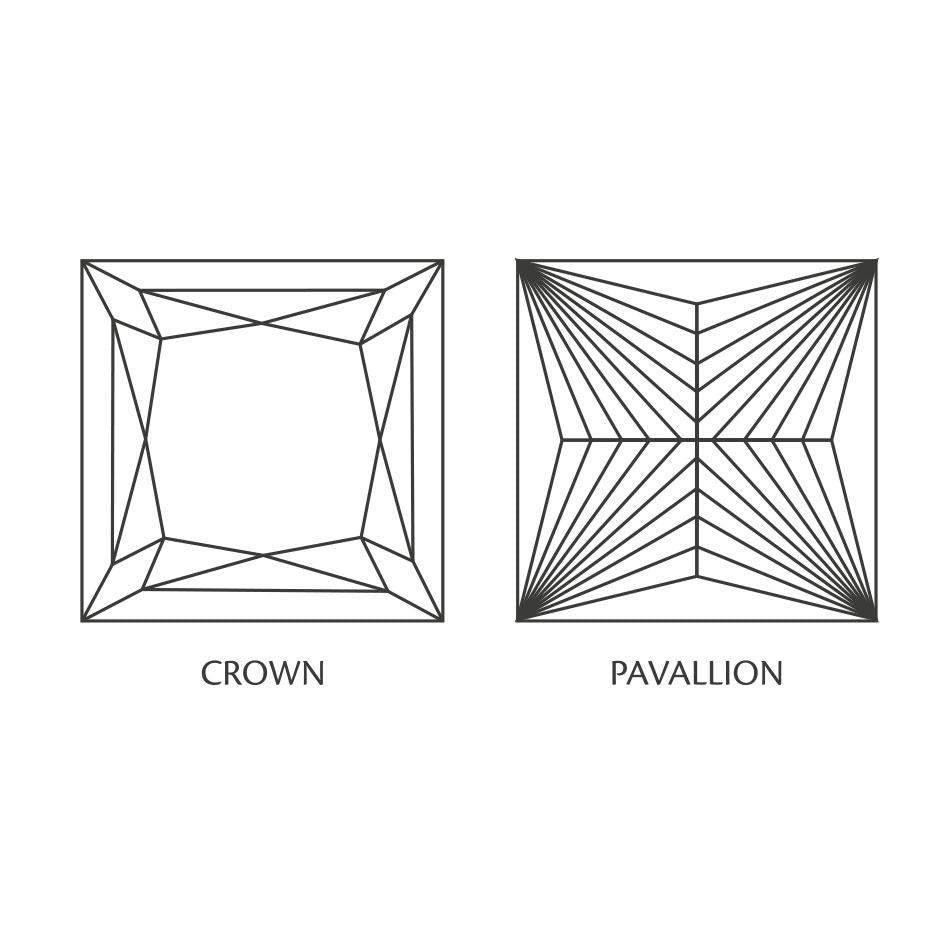
Enumerating Diamond Cuts: How Mathematics Could Reveal the Full Design Space of Diamond Faceting
When we look at a diamond, we usually see a finished object: a polished stone defined by its outline, proportions, symmetry and play of light. But before a diamond becomes a finished jewel, it can ...
Read more