

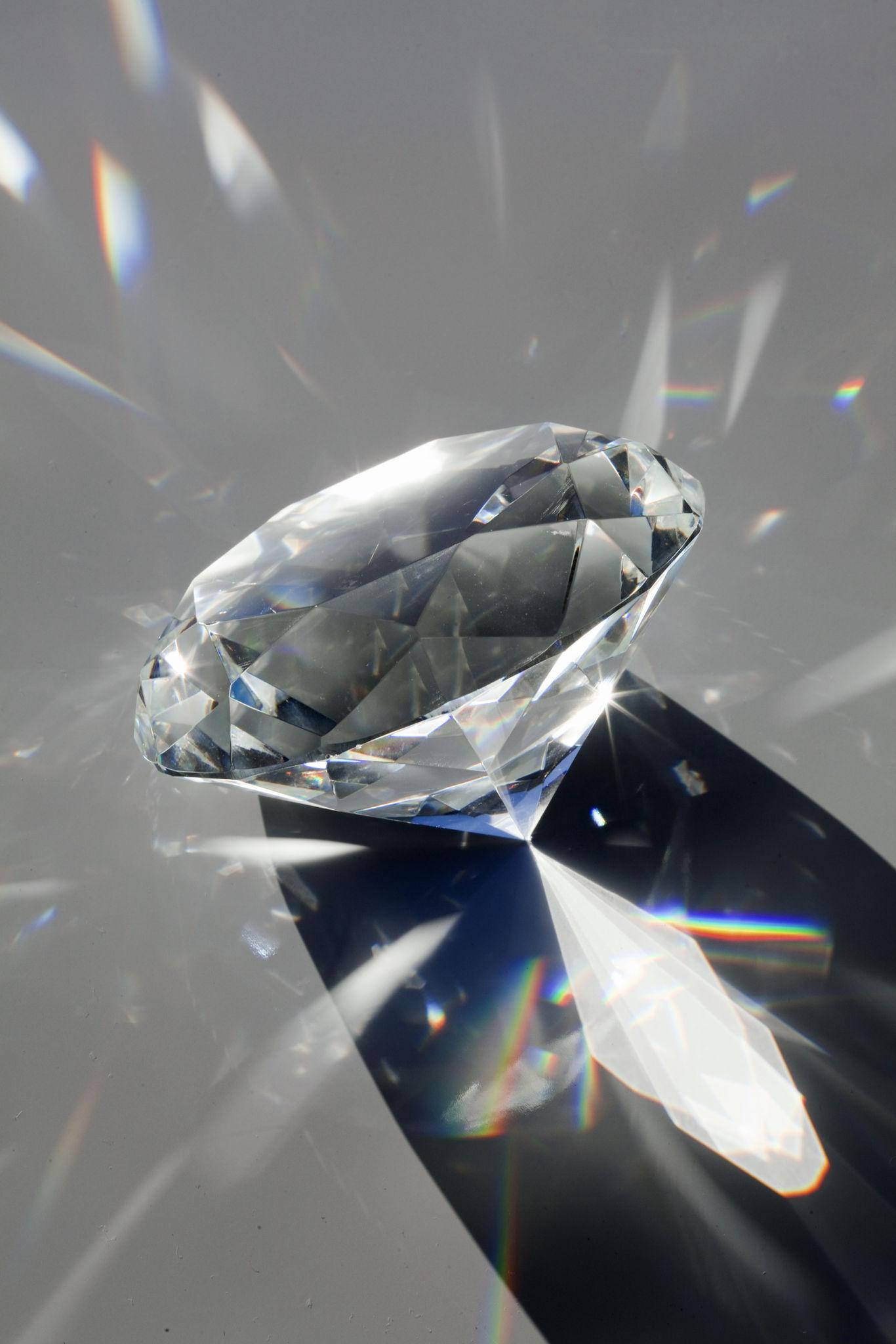
Why Is Diamond Called the "King of Gems"? The Science, Rarity, and Beauty Behind Nature's Most Extraordinary Gemstone
For centuries, diamonds have symbolized love, power, and prestige. From royal crowns and priceless museum collections to modern engagement rings, no gemstone has captured the world's imagination quite like the diamond.
But beyond its beauty lies an even more fascinating story.
Diamonds are not only the hardest natural material on Earth—they are also geological time capsules that formed billions of years ago deep beneath our planet's surface. Their exceptional physical properties, scientific significance, and unmatched rarity have earned them a title few gemstones can claim: the King of Gems.
Here's why.
The Hardest Natural Material on Earth

Diamonds are famous for their incredible durability.
Ranking 10 on the Mohs Hardness Scale, they are the hardest naturally occurring material known. This remarkable hardness makes diamonds exceptionally resistant to scratching, allowing them to maintain their beauty for generations.
Beyond hardness, diamonds also possess remarkable physical characteristics, including:
-
Exceptional brilliance and fire
-
Outstanding thermal conductivity
-
High resistance to corrosion and chemical damage
-
Long-term durability suitable for everyday wear
These properties make diamonds ideal not only for fine jewelry but also for advanced industrial and scientific applications.
Explore our collection of GIA Certified Natural Diamonds to discover diamonds selected for their exceptional beauty and craftsmanship.
A Journey Billions of Years in the Making

Unlike laboratory-grown diamonds, natural diamonds began their journey between 150 and over 600 kilometres beneath the Earth's surface.
Created under extraordinary heat and pressure, many natural diamonds formed between one and three billion years ago, with some dating back approximately 3.5 billion years.
These ancient gemstones are transported to the Earth's surface through rare volcanic eruptions, making every natural diamond a remarkable geological survivor.
Some exceptionally rare diamonds, known as Superdeep Diamonds, originated even deeper within the Earth's mantle, carrying valuable scientific information about regions humans can never directly explore.
Learn more about natural diamond formation through our Diamond Education Centre
Nature's Most Colourful Surprise

Although colourless diamonds are the most familiar, natural diamonds actually occur in an extraordinary spectrum of colours.
These include:
-
Pink
-
Blue
-
Yellow
-
Green
-
Brown
-
Grey
-
Orange
-
Violet
The colours are created by tiny atomic irregularities, known as optical centres, within the diamond's crystal lattice.
These microscopic features influence how light interacts with the diamond, producing some of the rarest and most valuable gemstones in the world.
Understanding these colour-causing characteristics also allows gemologists to distinguish natural fancy-coloured diamonds from treated or laboratory-created alternatives.
Discover our Fancy Colour Diamond Collection.
✨ Discover the Diamond That's Right for You
Book a Private Consultation in Hong Kong
or
Speak with our diamond specialists on WhatsApp
Whether you're searching for a timeless engagement ring or a rare investment diamond, our experts can help you compare diamond quality, rarity, and certification.
How Gemologists Reveal a Diamond's Hidden Story

Two diamonds may appear identical to the naked eye, yet their internal structures can reveal completely different origins.
Professional gemological laboratories use sophisticated analytical technologies to study a diamond's microscopic characteristics.
Some of the most important methods include:
Photoluminescence (PL) Spectroscopy
This technique uses lasers to detect trace atomic defects within a diamond, helping identify natural, laboratory-grown, or treated stones.
Infrared (FTIR) Spectroscopy
Infrared analysis detects trace elements such as nitrogen and boron, forming the basis of the internationally recognised Diamond Type Classification System.
Deep UV Fluorescence Imaging
High-energy ultraviolet light reveals unique growth structures invisible under normal observation, providing valuable clues about how the diamond formed.
These technologies allow gemologists to identify characteristics impossible to detect through visual inspection alone.
Learn more about Diamond Certification and Identification.
Professional Diamond Screening Matters

As laboratory-grown diamonds become increasingly common, accurate identification has never been more important.
Modern screening instruments—such as the GIA iD100®—can rapidly analyse a diamond's luminescence response under ultraviolet light.
If the instrument detects a natural signature, the diamond passes screening immediately.
If not, additional laboratory testing is recommended to determine whether the stone is laboratory-grown, treated, or another diamond simulant.
While screening devices provide valuable initial information, comprehensive identification still relies on advanced laboratory analysis and experienced gemologists.
This is why purchasing a GIA Certified Diamond offers valuable confidence regarding both authenticity and quality.
More Than a Gemstone
A diamond is far more than a beautiful crystal.
It is one of the oldest natural objects you can own—a masterpiece created by Earth's extraordinary geological forces over billions of years.
Each natural diamond carries a unique record of our planet's history while offering exceptional durability, brilliance, and rarity that few other gemstones can rival.
Whether admired for its scientific significance, celebrated as a symbol of enduring love, or treasured as an heirloom for future generations, the diamond continues to earn its reputation as the true King of Gems.
Explore our Natural Diamond Collection, learn more through our Diamond Education Centre to discover the remarkable story behind every diamond.
Read more
Moissanite vs. Diamond: What's the Difference and Which Stone Is Right for You?
As alternative gemstones become increasingly popular, one question continues to come up among engagement ring shoppers: Is moissanite the same as a diamond? The short answer is no. Although moissan...
Read more
The World of Coloured Gemstones: Beyond Diamonds to Nature's Most Vibrant Treasures
While diamonds have long been celebrated for their brilliance and rarity, the world of fine jewellery extends far beyond a single gemstone. Throughout history, vibrant coloured gems have captivated...
Read more