


Engagement Ring Styles vs. Settings: What’s the Difference?
Choosing an engagement ring is about more than finding a beautiful diamond. The way that diamond is framed, secured and presented can completely change the character of the finished ring.
One of the most useful distinctions to understand is the difference between engagement ring style and engagement ring setting.
The two terms are often used interchangeably, but they describe different aspects of a ring.
Style is the ring's personality — the overall aesthetic, inspiration and design language.
Setting is the ring’s architecture — the technique and structure used to mount and secure the centre stone.
Understanding this difference makes it much easier to communicate what you want, whether you are browsing ready-to-wear designs or creating a bespoke engagement ring in Hong Kong.
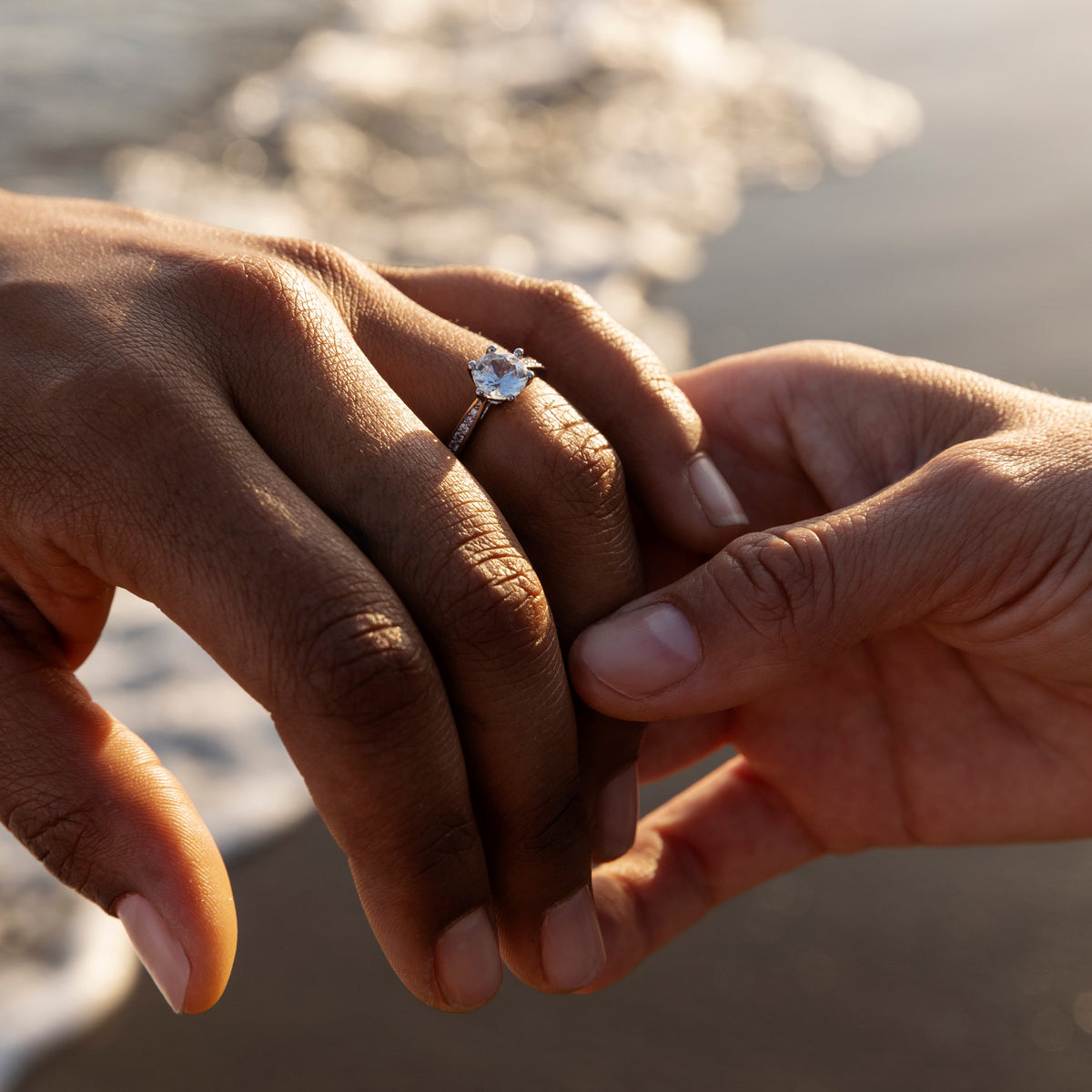
Engagement Ring Style vs. Setting
The simplest way to understand the difference is to think of style as personality and setting as structure.
An engagement ring style may be:
Classic and timeless
Vintage or antique-inspired
Modern and architectural
Nature-inspired
Unique and unconventional
A setting, meanwhile, describes how the diamond or gemstone is mounted. Examples include:
- Solitaire
- Three stone
- Halo
- Hidden halo
- Bezel
- Toi et moi
- East-west
- Cathedral
- Pavé
- Split shank
The two can be combined in almost unlimited ways.
For example, a ring can have a classic style with a solitaire setting, a modern style with an east-west setting, or a vintage-inspired style with a halo and pavé setting.
That distinction becomes particularly important when designing a custom ring. Mangrove Diamonds' custom jewellery service allows the design process to develop around the stone, proportions, metal and intended wear rather than treating style and setting as one fixed choice.
Engagement Ring Styles
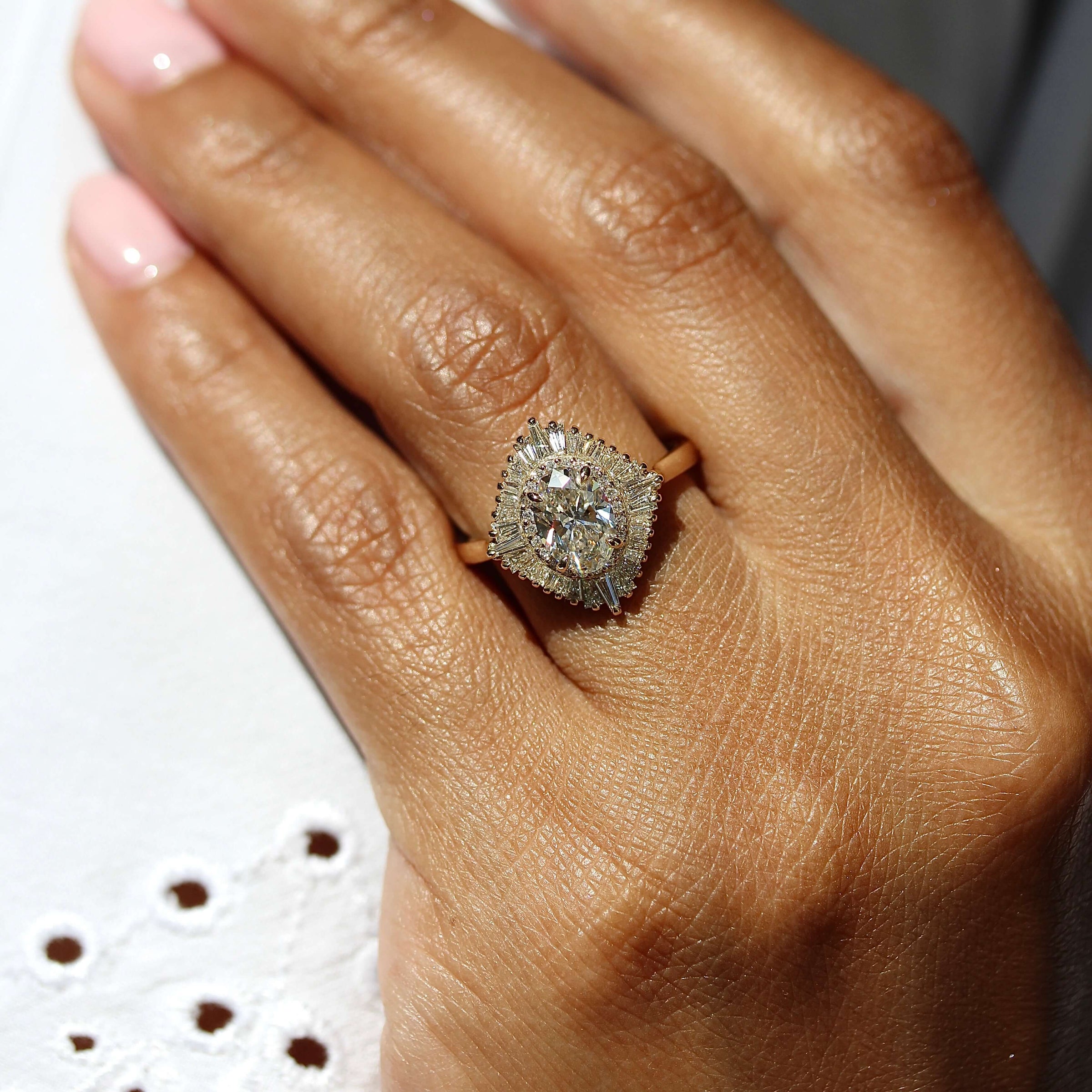
1. Unique Engagement Ring Styles
Unique engagement rings are designed to move beyond conventional silhouettes.
Instead of following a familiar round solitaire or traditional halo, these designs may introduce unusual gemstone shapes, asymmetry, unexpected proportions or distinctive metalwork.
Hexagonal, kite, marquise and other unconventional shapes can create a very different visual language. Coloured gemstones such as sapphire or emerald can also become the focal point rather than simply serving as accents.
The appeal is fundamentally personal.
A unique engagement ring can reflect a particular story, personality, architectural influence or aesthetic preference. For someone who wants their ring to feel individual rather than immediately recognisable as a traditional engagement ring, this approach offers considerable creative freedom.
Possible setting combinations: east-west, bezel, split shank, asymmetrical side stones or Toi et Moi.
Unique engagement rings are designed to move beyond conventional silhouettes.
2. Vintage & Antique-Inspired Styles
Vintage engagement ring styles draw from historical jewellery traditions rather than contemporary minimalism.
Different periods create very different visual languages.
Art Deco is associated with geometric forms, strong symmetry and bold lines. Victorian-inspired designs often feature romantic floral motifs, filigree and softer ornamental details. Edwardian-inspired jewellery may incorporate delicate lace-like metalwork and milgrain detailing.
The attraction of vintage-inspired jewellery is not simply its appearance. These designs can make craftsmanship itself part of the visual story.
For a modern engagement ring, vintage details can also be selectively incorporated rather than reproduced as a complete historical style. A contemporary diamond can sit within a setting featuring milgrain edges, engraved details or geometric accents, creating a balance between old-world character and modern proportions.
3. Nature-Inspired Engagement Ring Styles
Nature-inspired designs take their vocabulary from leaves, vines, flowers and branches.
Instead of straight architectural lines, the metalwork may curve organically around the centre stone. Small details can appear to grow from the band or cradle the gemstone like petals.
This creates movement within the design and can make the ring feel softer and more romantic.
Nature-inspired style can also be combined with a more restrained setting. A solitaire centre stone, for example, can remain visually dominant while botanical metalwork provides subtle detailing around the gallery or shoulders.
4. Modern Engagement Ring Styles
Modern engagement rings often focus on form, proportion and negative space rather than elaborate decoration.
Geometric gemstone shapes, unusual orientations and clean metal structures can give a ring a distinctly contemporary appearance.
An elongated emerald-cut diamond positioned horizontally is one example. A sculptural split shank is another. Even a simple solitaire can feel modern when the proportions, band profile and setting architecture are deliberately refined.
Modern style does not necessarily mean dramatic.
Some contemporary rings are deliberately understated, allowing precision of construction and the beauty of the centre stone to provide the visual interest.

5. Classic & Timeless Engagement Ring Styles
Classic engagement rings are built around design elements that remain visually relevant over generations.
The centre diamond typically takes priority, with the surrounding design kept relatively restrained. Solitaire rings and traditional three-stone arrangements are among the most recognisable examples.
The strength of this style is its versatility.
A classic ring can work with different diamond shapes, metals and setting details while retaining its fundamental character. This makes it particularly suitable for someone who prefers enduring elegance rather than a design closely tied to a particular fashion moment.
Engagement Ring Settings
While style describes the aesthetic direction, the setting determines how the centre stone is mounted.
It influences the stone's position, security, visual prominence and relationship with the rest of the ring.
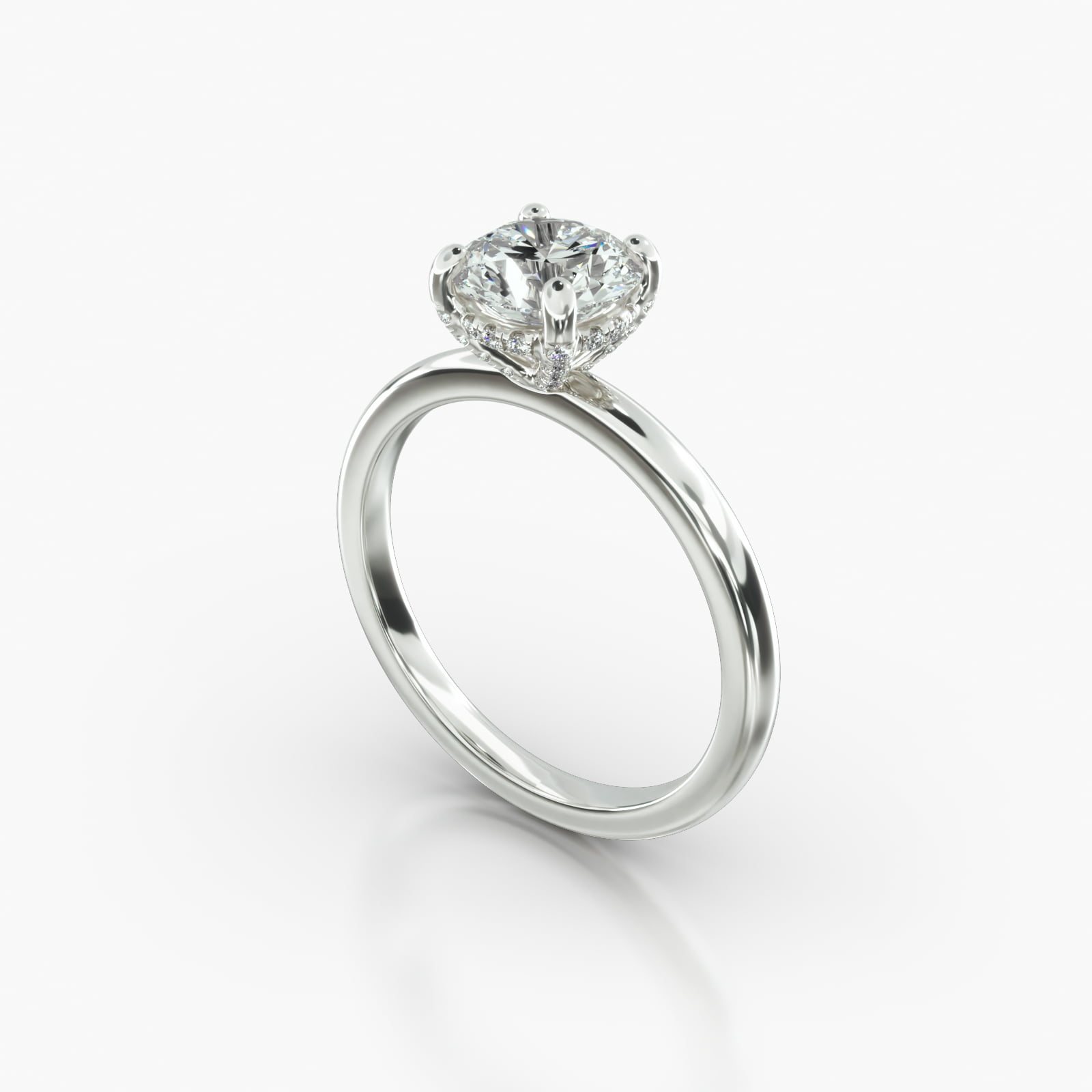
1. Solitaire Setting
The solitaire is perhaps the most recognisable engagement ring setting.
It features one centre stone, usually secured with four or six prongs, without a surrounding halo or multiple side stones competing for attention.
Its simplicity is precisely what makes it effective.
The centre diamond becomes the visual focus, while the minimal structure can create a clean and elegant silhouette. Because the setting itself is relatively restrained, the choice of centre stone becomes especially important.
A solitaire can also be adapted to almost any style — from traditional and romantic to highly contemporary.
Mangrove's engagement ring collection includes solitaire designs alongside hidden halo, three-stone and cathedral configurations.
2. Three-Stone Setting
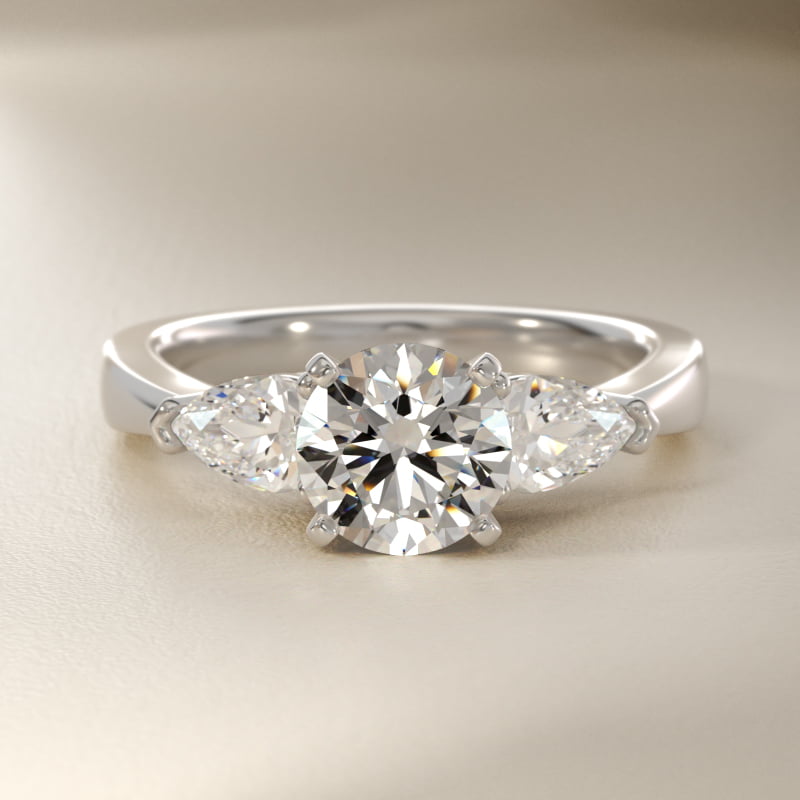
A three-stone setting places a centre gemstone between two smaller stones.
The three stones can match in colour and shape, or deliberately contrast with one another.
The arrangement is traditionally associated with the symbolism of past, present and future, although its balanced proportions are equally appealing from a purely design perspective.
A three-stone ring generally has more visual presence than a solitaire while retaining a relatively clean silhouette.
For those who want a stronger horizontal presence around the centre diamond, side stones can also be selected in contrasting shapes such as trapezoids or baguettes.
3. Halo Setting
A halo surrounds the centre stone with a circle of smaller gemstones.
This creates two immediate visual effects: additional sparkle around the centre and a larger overall silhouette.
The halo can be particularly effective when the goal is to give a smaller centre stone greater visual presence. It can also be customised considerably.
A traditional round halo creates a classic appearance, while a geometric halo can feel more architectural. Coloured gemstones can replace the surrounding diamonds to introduce contrast and personality.

4. Hidden Halo Setting
A hidden halo takes the concept of a halo and moves it beneath the centre stone.
From above, the ring can appear relatively clean and understated. From the side, however, a circle of small diamonds becomes visible beneath the centre stone.
This makes the hidden halo particularly interesting for someone who wants additional detail without a traditional halo dominating the top view.
It is a small design decision, but one that can significantly change the ring's profile.
Mangrove currently offers designs combining hidden halo and solitaire settings, illustrating how several setting concepts can be combined within a single ring.

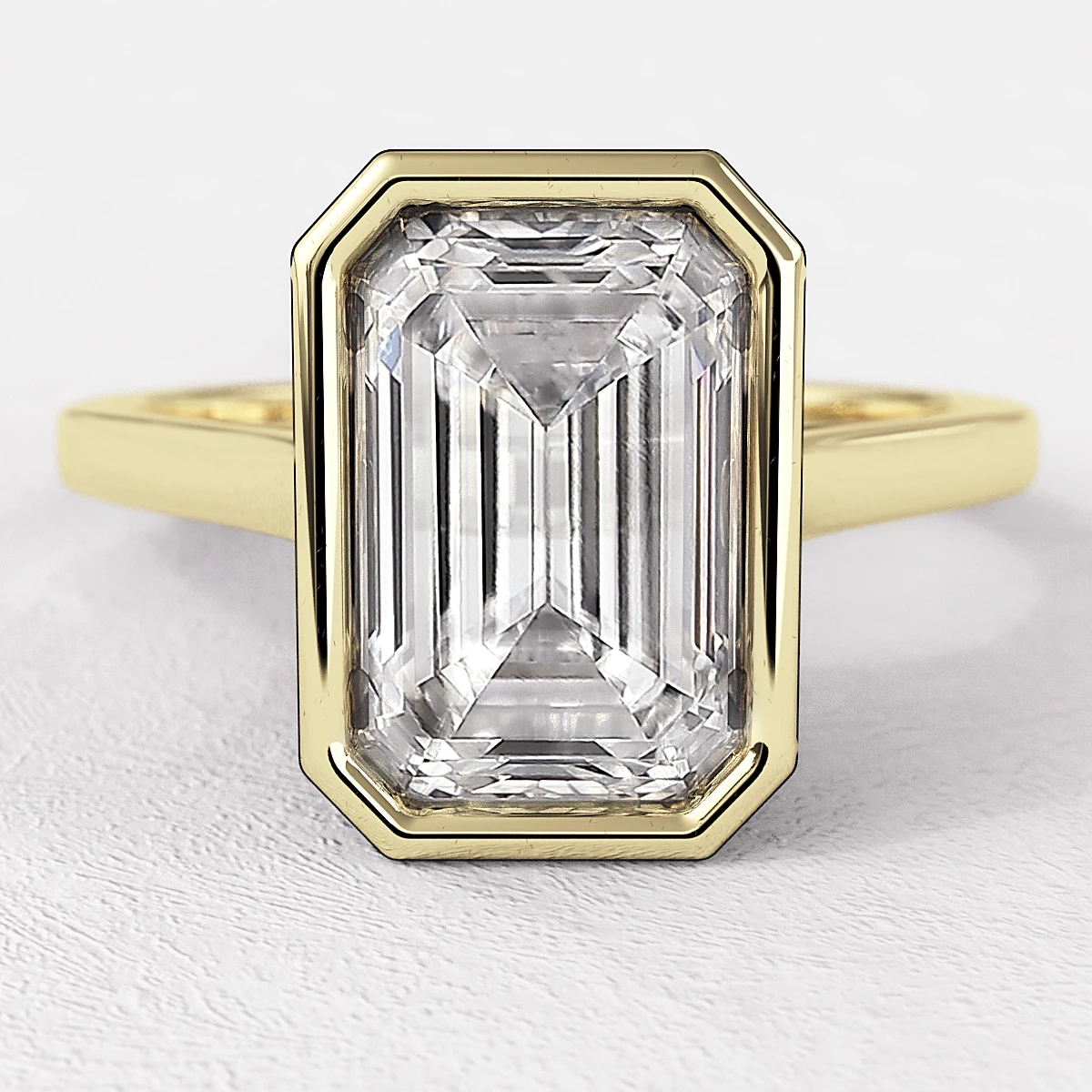
5. Bezel Setting
A bezel setting uses metal to surround all or part of the gemstone.
Unlike a traditional prong setting, where small claws hold the stone in place, the metal rim creates a more enclosed architectural appearance.
This can give the ring a sleek, contemporary character while providing substantial protection around the stone.
A bezel can therefore be particularly attractive for people who prefer clean lines or a lower-profile visual language.
It also demonstrates why the setting is more than decoration: it directly influences how the stone is held within the ring.
6. Toi et Moi Setting
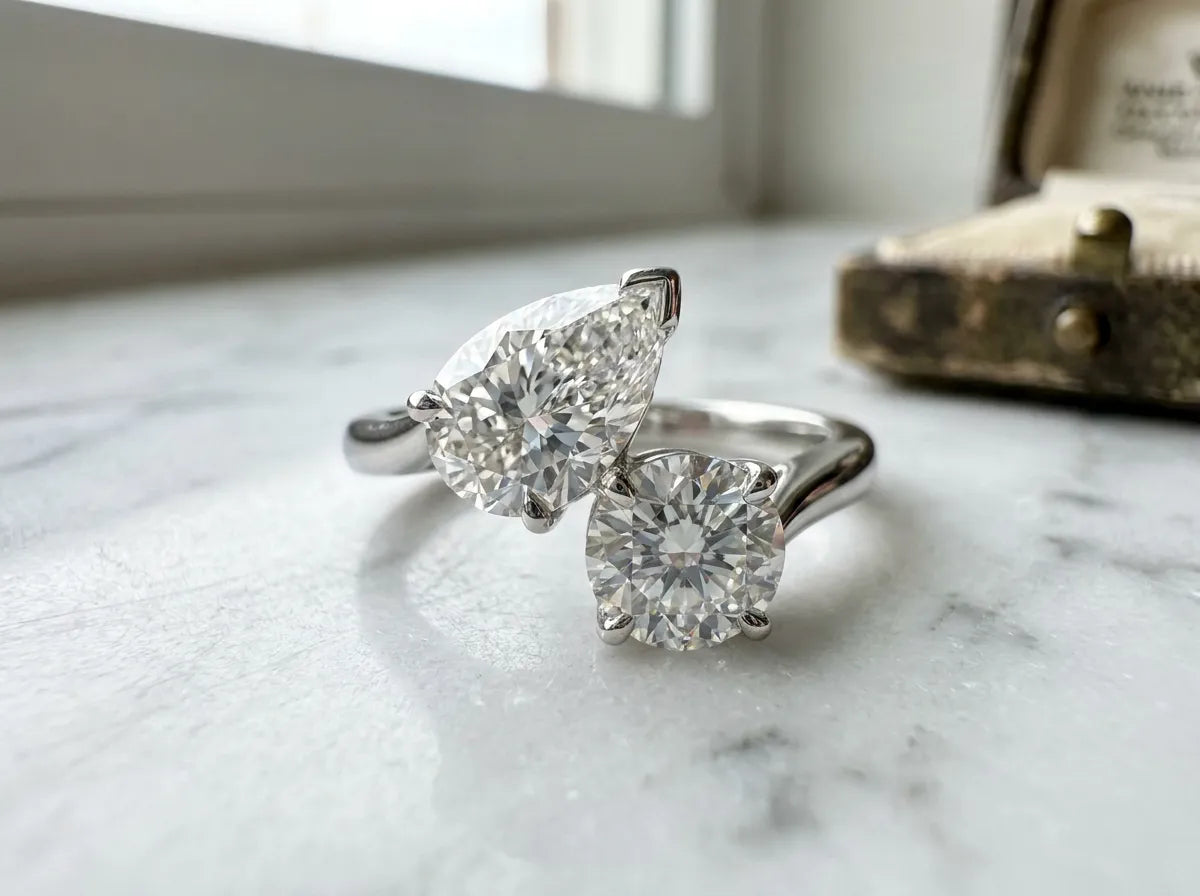
Toi et moi means “you and me” in French.
The setting places two gemstones beside one another, often at a slight angle. The stones may be similar or deliberately contrasting.
Two diamonds create a symmetrical interpretation, while a diamond paired with a coloured gemstone can introduce a more individual character.
The result is visually distinctive and carries an obvious symbolic association with two people coming together.
For couples looking for something more expressive than a conventional solitaire, Toi et Moi offers a strong design alternative.
7. East-West Setting
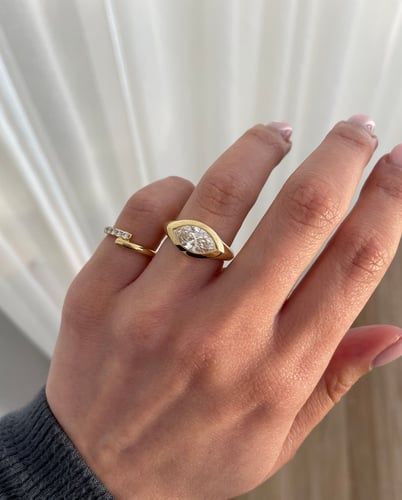
An east-west setting rotates the centre stone horizontally across the finger rather than placing it along the traditional vertical axis.
This works particularly well with elongated shapes such as:
Oval
Emerald
Marquise
Elongated radiant
The orientation immediately changes the personality of the ring.
A horizontally positioned emerald-cut diamond, for example, can transform an otherwise familiar shape into something distinctly contemporary.
The design can remain minimalist with a simple band, or become more elaborate through side stones and pavé detailing.
8. Cathedral Setting
Cathedral settings use curved arches that rise from the shoulders of the band to support and elevate the centre stone.
The name comes from the architectural inspiration of Gothic cathedrals, where arches create a sense of height and structure.
This elevated construction gives the centre diamond a prominent profile and can leave space underneath the setting for a wedding band to sit alongside it.
Cathedral architecture can also be combined with other settings. For example, a ring can be both cathedral and solitaire, or cathedral and hidden halo.
Mangrove's emerald-cut three-stone cathedral engagement ring illustrates how these categories can overlap within one design.

9. Pavé Setting
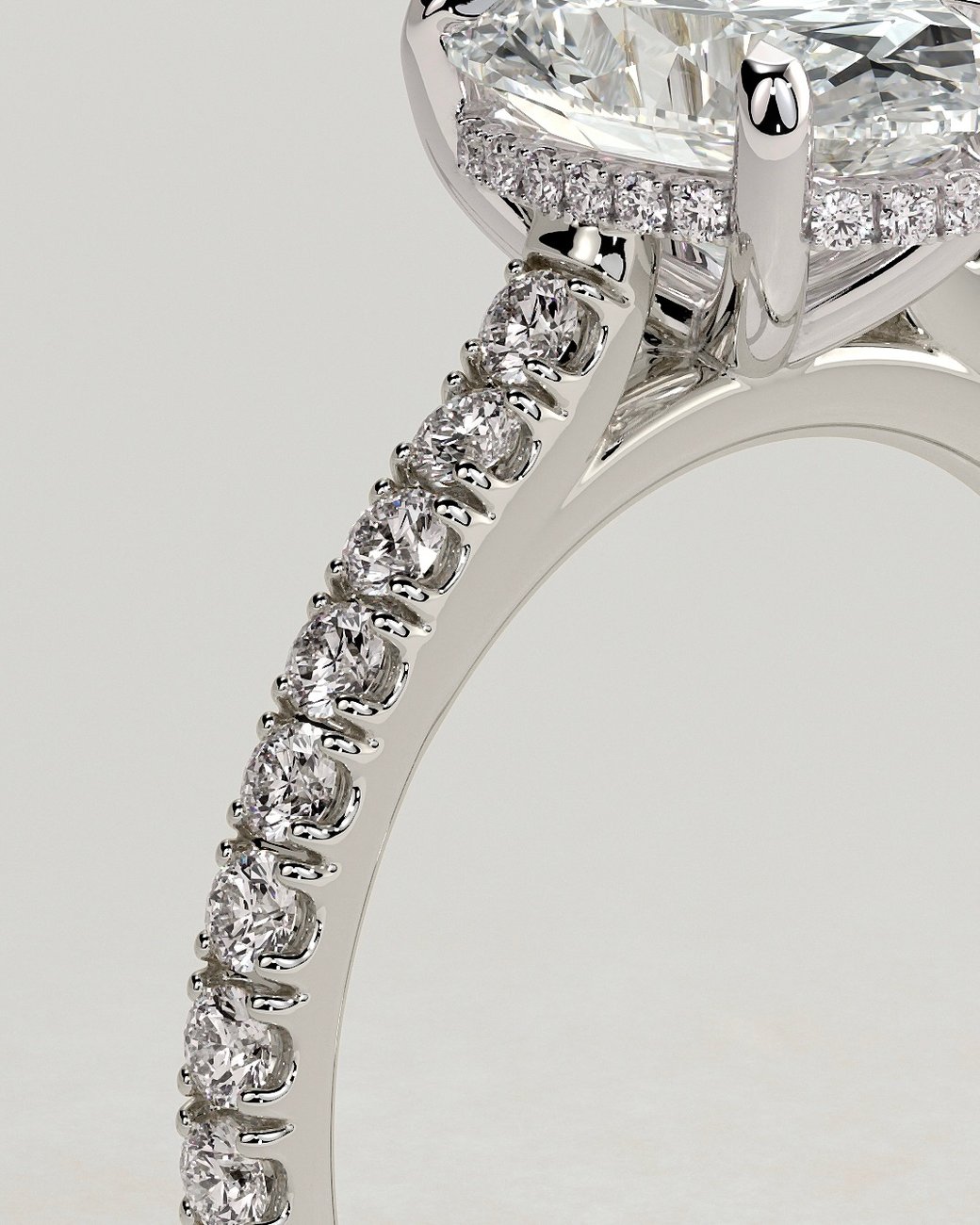
Pavé — pronounced pah-VAY — refers to small diamonds set closely together along the band.
The individual stones are held with tiny beads or prongs, creating the impression of a continuous surface of diamonds.
Pavé is useful when you want additional sparkle without adding large side stones.
It can cover the entire band or appear only along selected sections, giving the designer considerable control over how much visual emphasis is placed on the centre stone versus the surrounding ring.
A pavé band can also be combined with solitaire, halo, cathedral or other setting structures.
For example, Mangrove's platinum cushion-cut engagement ring with French pavé combines a solitaire-style centre with additional diamond detail along the band.
10. Split Shank Setting
A split shank divides the band into two or more strands as it approaches the centre stone.
This creates negative space between the strands and can make the centre setting appear larger and more dimensional.
The split sections can remain polished for a clean contemporary effect or be decorated with pavé diamonds for additional brilliance.
Because of its architectural structure, the split shank works particularly well with modern and dramatic engagement ring styles.
How Style and Setting Work Together
The most important point is that style and setting are not competing categories.
They operate at different levels of the design.
Consider these combinations:
|
Overall Style |
Possible Setting |
|
Classic |
Solitaire |
|
Vintage |
Halo or Pavé |
|
Modern |
East-West or Bezel |
|
Romantic |
Three Stone or Halo |
|
Nature-inspired |
Solitaire with botanical metalwork |
|
Contemporary |
Split Shank |
|
Personal & expressive |
Toi et Moi |
|
Refined luxury |
Hidden Halo Cathedral |
There is no requirement for one style to correspond to only one setting.
A modern ring can use a traditional solitaire. A vintage-inspired ring can incorporate a hidden halo. A classic three-stone ring can use contemporary gemstone shapes.
This flexibility is especially valuable when designing a ring from scratch.
Choosing a Style and Setting for a Bespoke Engagement Ring
For a custom engagement ring, it can help to separate the decision into two stages.
First, define the style.
Ask yourself:
- Do I prefer classic or contemporary design?
- Do I want the ring to feel romantic, architectural or understated?
- Would historical details add meaning?
- Do I want the design to look conventional or distinctive?
- Should the centre diamond dominate the ring?
Then consider the setting.
Ask:
- How do I want the centre stone positioned?
- Do I prefer visible prongs or a surrounding metal bezel?
- Do I want additional diamonds?
- Should the ring have a low or elevated profile?
- Do I want the centre stone oriented vertically or horizontally?
- Will the ring need to sit comfortably beside a wedding band?
- This approach makes the design process much clearer.
Mangrove's Build Your Own Ring experience similarly separates the selection of the setting from the selection of the diamond, allowing the two elements to be considered as complementary parts of the finished ring.
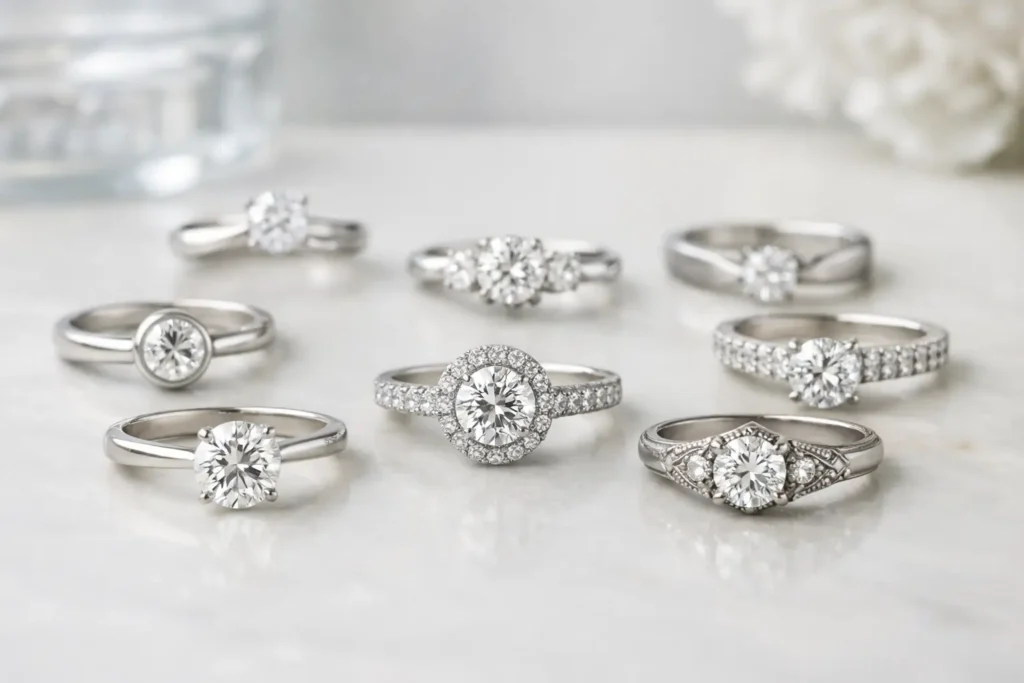
The Setting Is Part of the Ring's Identity
A diamond may be the centre of an engagement ring, but the setting determines much of how that diamond is experienced.
A solitaire creates restraint.
A halo creates surrounding brilliance.
A bezel creates a clean architectural frame.
A cathedral creates height and structure.
An east-west setting introduces an unexpected orientation.
A Toi et Moi design creates a visual conversation between two stones.
Meanwhile, the style gives the entire composition its personality — whether that means vintage romance, modern minimalism, nature-inspired detail or timeless elegance.
The most successful bespoke designs are therefore not simply about choosing a beautiful diamond. They are about understanding how stone, style, setting and craftsmanship work together as one piece.
Design Your Engagement Ring in Hong Kong
For couples looking for a personalised engagement ring, the process can begin with something as simple as a preferred diamond shape, a reference image or an idea about the overall aesthetic.
From there, the centre stone and setting can be developed together.
At Mangrove Diamonds, the custom jewellery service in Tsim Sha Tsui takes clients through consultation, stone selection, design development, approval and craftsmanship, allowing details such as proportions, setting height and wedding-band compatibility to be considered during the design process.
Your style defines the feeling. Your setting defines the structure. Your diamond brings the design to life.
Start With Your Diamond, Then Build the Ring Around It
Read more

Tucson 2026 Gemstone Trends: The Colors, Stones & Cutting Styles Defining Luxury Jewellery
Every February, the global gemstone industry gathers in Tucson, Arizona, for one of the most important annual meetings of gem dealers, cutters, designers and collectors. The 2026 Tucson shows offer...
Read more
Red & Orange Spinel from Myanmar and Vietnam: How Science Reveals Colour, Origin and Rarity
Among the world’s exceptional coloured gemstones, spinel has undergone a remarkable transformation in perception. Once frequently mistaken for ruby in historic jewellery, fine spinel is now appreci...
Read more