
What Is Diamond Carat? — Understanding Weight, Size, and Value
When shopping for a diamond, few terms are more recognized — or more misunderstood — than carat.
Many assume carat refers to the physical size of a diamond, when in reality, it measures something entirely different: weight.
Understanding how diamond carat works is essential when choosing a stone that balances brilliance, visual presence, and budget. Because in fine jewelry, a larger number does not always mean a larger-looking diamond.
What Does Diamond Carat Actually Mean?

Diamond carat is the standard measurement of a diamond’s weight.
One carat equals:
-
0.2 grams
-
200 milligrams
Professionals divide each carat into 100 “points” for precision. For example:
-
0.50 carat = 50 points
-
1.25 carat = 125 points
The term itself originates from ancient gem traders, who once used carob seeds as counterweights because of their remarkably consistent weight.
Today, the modern metric carat provides a universal global standard used in diamond grading and certification.
Learn more about diamond grading through our Diamond Education Guide.
Carat Weight vs Diamond Size — Why They Are Not the Same

One of the most common misconceptions is that carat equals size.
In reality:
-
Carat measures weight
-
Size refers to visual dimensions
Two diamonds with the same carat weight may appear dramatically different depending on:
-
Shape
-
Cut proportions
-
Depth
-
Surface area
For example:
-
An oval diamond often appears larger than a round diamond of the same carat weight
-
A poorly cut diamond may carry excess weight hidden in depth, making it appear smaller from above
This is why cut quality matters just as much as carat weight.
Explore our collection of GIA certified oval diamonds carefully selected for optimal visual spread and brilliance.
✨ Need Help Choosing the Right Carat Size?
Speak with our team on WhatsApp
or Book a private consultation in Hong Kong
Why Diamond Shape Changes Size Appearance

Certain diamond shapes naturally appear larger than others.
Elongated Shapes
Shapes such as:
-
Oval
-
Pear
-
Marquise
-
Emerald cut
often appear larger because they distribute weight across length rather than depth.
This creates more visible surface area — making the diamond feel more substantial without increasing carat weight.
Round Diamonds
Round brilliant cuts prioritize maximum sparkle, though they may appear slightly smaller than elongated shapes of equal weight.
For clients looking to maximize visual size while maintaining elegance, elongated cuts are often an excellent choice.
Browse our elongated diamond engagement ring collection designed to enhance visual presence beautifully.
Understanding “Magic Sizes” — Why Price Changes Dramatically

Diamond pricing is not linear.
Certain weights — often called “magic sizes” — command significantly higher prices due to demand.
These thresholds include:
-
0.50 carat
-
0.75 carat
-
1.00 carat
-
1.50 carat
-
2.00 carat
For example:
A 0.97-carat diamond may look nearly identical to a 1.00-carat diamond, yet the price difference can be substantial.
This is why many experienced buyers choose diamonds just below these thresholds to maximise value without sacrificing visual impact.
How to Make a Diamond Look Larger

Carat weight is only one way to create visual presence.
Several design choices can make a diamond appear significantly larger:
Halo Settings
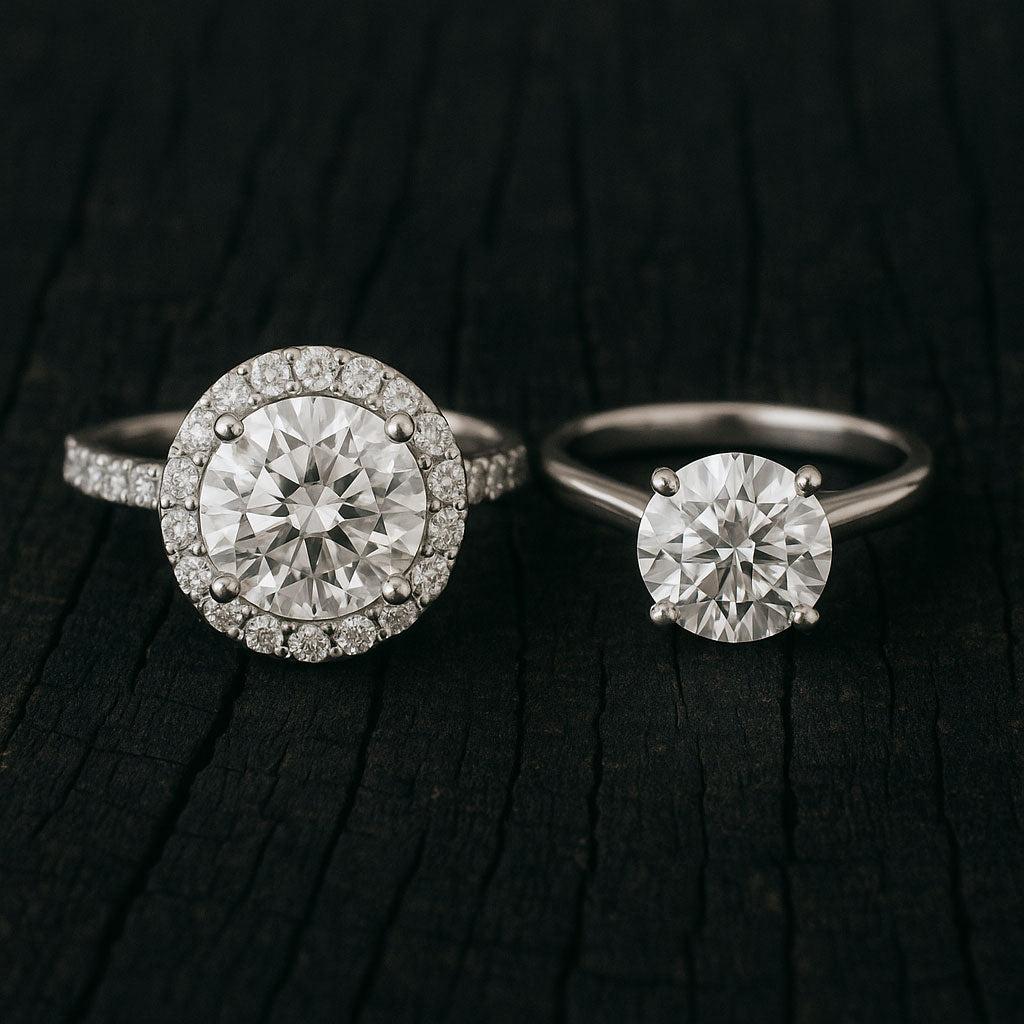
A halo of smaller diamonds surrounding the centre stone increases perceived size and enhances brilliance.
Delicate Bands
Thinner bands place more visual emphasis on the centre diamond.
White Metals
Platinum and white gold blend seamlessly with colourless diamonds, reducing visual contrast and enhancing size appearance.
Elongated Shapes
Oval, pear, and marquise cuts maximise surface area and create a more elongated look on the hand.
Explore our halo engagement ring collection
and oval cut diamond designs crafted to maximise brilliance and presence.
Lab-Grown Diamonds — Bigger Visual Impact with Greater Flexibility

For those prioritizing carat size, lab-grown diamonds offer exceptional flexibility.
Because they are more accessible in price than natural diamonds, clients can often choose:
-
Higher carat weights
-
Larger-looking shapes
-
More elaborate settings
without dramatically increasing budget.
Importantly, lab-grown diamonds remain:
-
Chemically identical
-
Optically identical
-
Physically identical
to natural diamonds.
Browse our curated collection of lab-grown diamond engagement rings featuring exceptional brilliance and craftsmanship.
Carat Is Important — But Balance Matters More

A beautiful diamond is never defined by carat weight alone.
True beauty comes from balance:
-
Cut quality
-
Shape
-
Proportions
-
Brilliance
-
Setting design
The right diamond is one that feels harmonious — visually impressive without sacrificing elegance.
At Mangrove Diamonds, we guide clients through every detail, helping them choose stones that maximise both beauty and value.
Explore our GIA certified diamond collection or book a private consultation in Hong Kong to find the perfect balance for your ring.
阅读更多
Modern vs Traditional Birthstones — Understanding the Meaning Behind Every Month
Birthstones have long connected jewelry with identity, symbolism, and personal history. For centuries, specific gemstones were associated with months, seasons, and even astrological traditions. Ove...
阅读更多
CZ vs Diamond — What’s the Difference and Which Should You Choose?
At first glance, cubic zirconia and diamonds can appear remarkably similar. Both sparkle beautifully. Both are commonly used in rings and fine jewelry. Yet beneath the surface, they are fundamental...
阅读更多