
Lab Grown vs. Natural Diamonds: What's the Difference and Which One Is Right for You?
As lab grown diamonds continue to grow in popularity, many buyers find themselves asking the same question: Are lab grown diamonds real?
The answer is yes—they are real diamonds. In fact, lab grown and natural diamonds share the same chemical composition, crystal structure, and optical beauty. Yet despite these similarities, there are important differences that can influence your purchasing decision.
Whether you're shopping for an engagement ring or investing in a timeless piece of fine jewelry, understanding these distinctions will help you choose the diamond that best reflects your priorities.
What Is a Lab Grown Diamond?

A lab grown diamond is a real diamond created in a controlled laboratory environment rather than formed naturally beneath the Earth's surface.
Using advanced technologies such as High Pressure High Temperature (HPHT) and Chemical Vapor Deposition (CVD), scientists recreate the conditions that allow carbon atoms to crystallize into diamond.
The result is a genuine diamond with the same:
-
Chemical composition
-
Crystal structure
-
Hardness
-
Brilliance
-
Fire
Once the rough crystal is formed, it follows the same journey as a natural diamond—being cut, polished, graded, and eventually set into jewelry.
Simply put, the only difference lies in how the diamond was created, not what it is.
Are Lab Grown Diamonds Real?

Yes. Lab grown diamonds are genuine diamonds.
They are not diamond simulants like cubic zirconia or moissanite, nor are they synthetic substitutes that merely resemble diamonds.
Both natural and laboratory-grown diamonds consist entirely of crystallized carbon arranged in the same atomic structure. As a result, they exhibit identical optical and physical properties.
To the naked eye—and even under standard jewelry inspection—they appear indistinguishable.
Whether natural or laboratory grown, both diamonds are graded using the internationally recognized 4Cs: Cut, Color, Clarity, and Carat Weight.
Learn more through our Diamond Education Centre, where we explain how diamonds are evaluated and certified.
What Do Lab Grown and Natural Diamonds Have in Common?

In terms of beauty and performance, lab grown and natural diamonds are virtually identical.
Both offer:
-
Exceptional brilliance and fire
-
A hardness of 10 on the Mohs scale
-
Outstanding durability for everyday wear
-
The same D-to-Z colour grading scale
-
The same clarity grading standards
-
Certification from recognised gemological laboratories
A beautifully cut lab grown diamond reflects light in exactly the same way as a natural diamond of equivalent quality.
For this reason, both can be stunning choices for engagement rings and fine jewelry.
Browse our collection of Diamond Engagement Rings, available in both natural and laboratory-grown options.
✨ Not Sure Which Diamond Is Right for You?
Book a Private Consultation in Hong Kong
or
Chat with our diamond specialists on WhatsApp
We'll help you compare natural and lab grown diamonds based on your budget, preferences, and long-term goals.
What Makes Natural and Lab Grown Diamonds Different?

Although the diamonds themselves are physically identical, three key differences remain.
Origin
Natural diamonds formed deep beneath the Earth's surface over billions of years through extraordinary geological processes.
Lab grown diamonds are created in carefully controlled laboratory environments over the course of several weeks.
Rarity
Natural diamonds are finite resources shaped by geological rarity.
Lab grown diamonds can be produced as technology advances, making them more readily available.
Price
Because laboratory production allows for greater supply, lab grown diamonds generally cost less than natural diamonds of comparable size and quality.
For many buyers, this creates the opportunity to purchase a larger centre stone or a higher clarity grade within the same budget.
Can You Tell the Difference by Looking?

The simple answer is no.
Even experienced jewelers cannot reliably distinguish a lab grown diamond from a natural diamond through visual inspection alone.
Professional laboratories rely on advanced technology to identify subtle differences such as:
-
Crystal growth patterns
-
Trace element distribution
-
Metallic inclusions associated with HPHT growth
-
CVD growth features
-
Laser inscriptions on the girdle
Specialized equipment is required to accurately determine a diamond's origin.
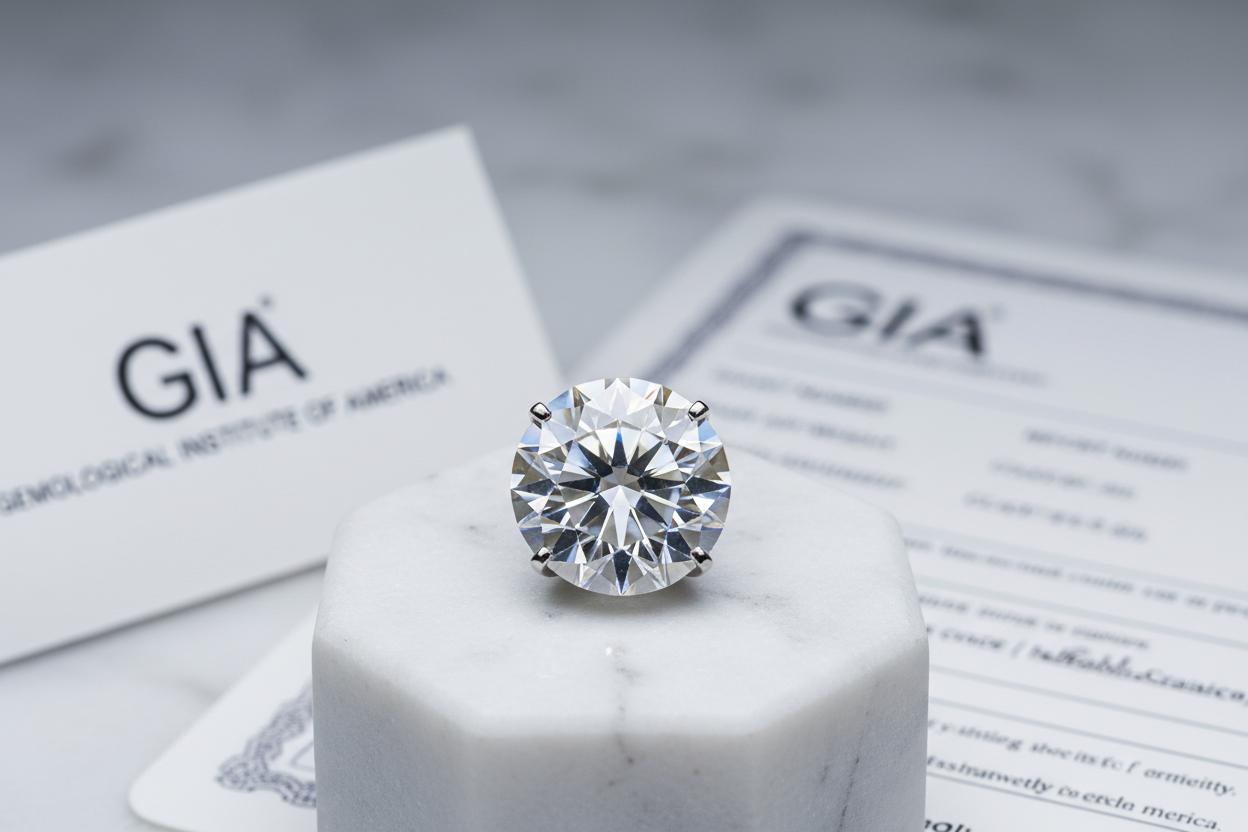
This is why purchasing a GIA Certified Diamond provides valuable assurance regarding both quality and origin.
How Are Lab Grown Diamonds Certified?

Lab grown diamonds undergo the same grading process used for natural diamonds.
Leading gemological laboratories—including GIA and IGI—evaluate them according to the same 4Cs.
Each grading report clearly identifies the diamond as laboratory grown while documenting its:
-
Cut
-
Colour
-
Clarity
-
Carat weight
-
Measurements
-
Additional identifying characteristics
Certification provides buyers with transparency and confidence, regardless of the diamond's origin.
Learn more about Diamond Certification before making your decision.
Common Myths About Lab Grown Diamonds
Many misconceptions continue to circulate regarding laboratory-grown diamonds.
Let's clarify a few of the most common:
"Lab diamonds are fake."
False. They are real diamonds with the same chemical and physical properties as natural diamonds.
"They don't sparkle as much."
False. Sparkle depends primarily on cut quality—not origin.
"They're less durable."
False. Both rank 10 on the Mohs hardness scale.
"Lab diamonds are flawless."
False. Like natural diamonds, laboratory-grown diamonds can also contain inclusions and internal characteristics.
Understanding these facts helps buyers compare diamonds based on informed priorities rather than common myths.
Should You Choose a Lab Grown or Natural Diamond?
There is no universally "better" choice—only the one that best aligns with your personal values and priorities.
A lab grown diamond may be ideal if you:
-
Want to maximise size or quality within your budget
-
Appreciate modern manufacturing technology
-
Prefer a diamond created without traditional mining
-
Want access to larger or fancy-coloured diamonds at a more accessible price
A natural diamond may be the better choice if you:
-
Value geological rarity
-
Appreciate a diamond formed over billions of years
-
Prefer the symbolism and history of a naturally created gemstone
-
Are looking for a stone with enduring natural scarcity
At Mangrove Diamonds, we believe both options deserve honest, transparent guidance rather than one-size-fits-all recommendations.
Choose the Diamond That Reflects Your Story
The conversation isn't about real versus fake—it's about understanding what matters most to you.
Both natural and lab grown diamonds are genuine diamonds capable of celebrating life's most meaningful moments.
Whether you prioritise rarity, tradition, value, or sustainability, making an informed decision begins with expert guidance and transparent certification.
Explore our collection of Natural Diamonds
or book a private consultation in Hong Kong to compare both options with the help of our diamond specialists.
阅读更多
How to Tell If a Diamond Is Real: Expert Tips Every Buyer Should Know
Buying a diamond is a meaningful investment, whether you're celebrating an engagement, marking a milestone, or adding to your jewelry collection. Naturally, one of the first questions many buyers a...
阅读更多
Moissanite vs. Diamond: What's the Difference and Which Stone Is Right for You?
As alternative gemstones become increasingly popular, one question continues to come up among engagement ring shoppers: Is moissanite the same as a diamond? The short answer is no. Although moissan...
阅读更多