Two Worlds of Pearls, Each with Its Own Beauty
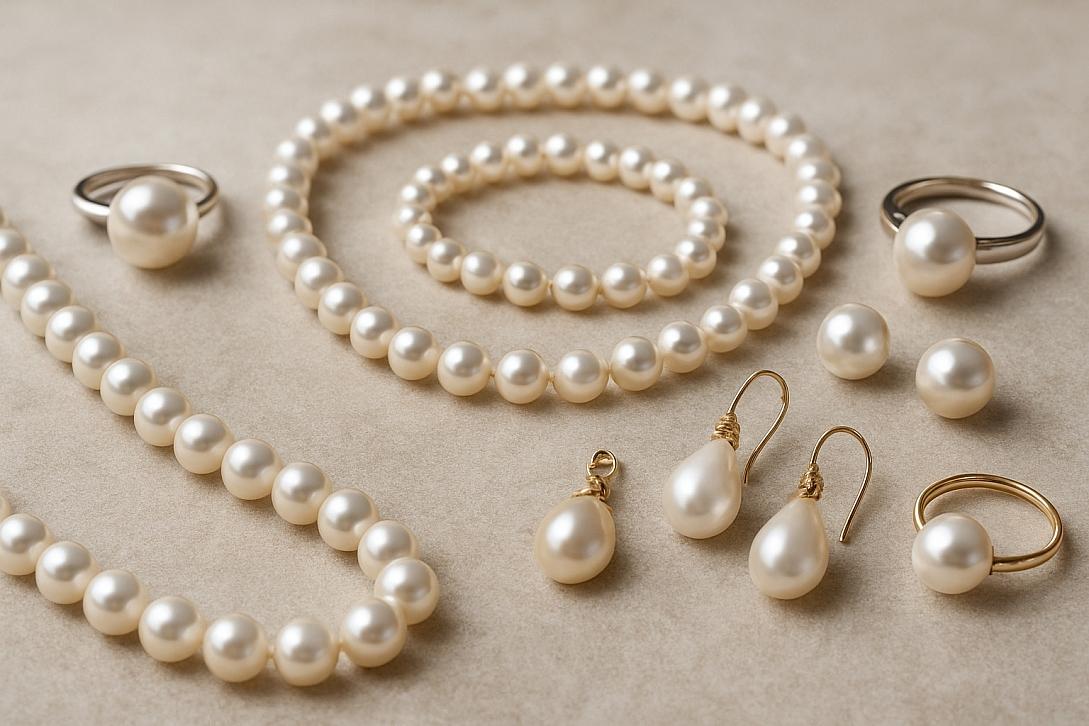
Pearls have a unique place in fine jewellery. Unlike gemstones that are extracted from the earth and shaped through cutting and polishing, pearls develop within living mollusks, gradually forming through layers of nacre. Their natural origins give them a distinctive character, with variations in colour, lustre, shape and size.
Yet not all pearls are formed in the same environment. Freshwater and saltwater pearls differ in the mollusks that produce them, their cultivation methods and the characteristics they develop.
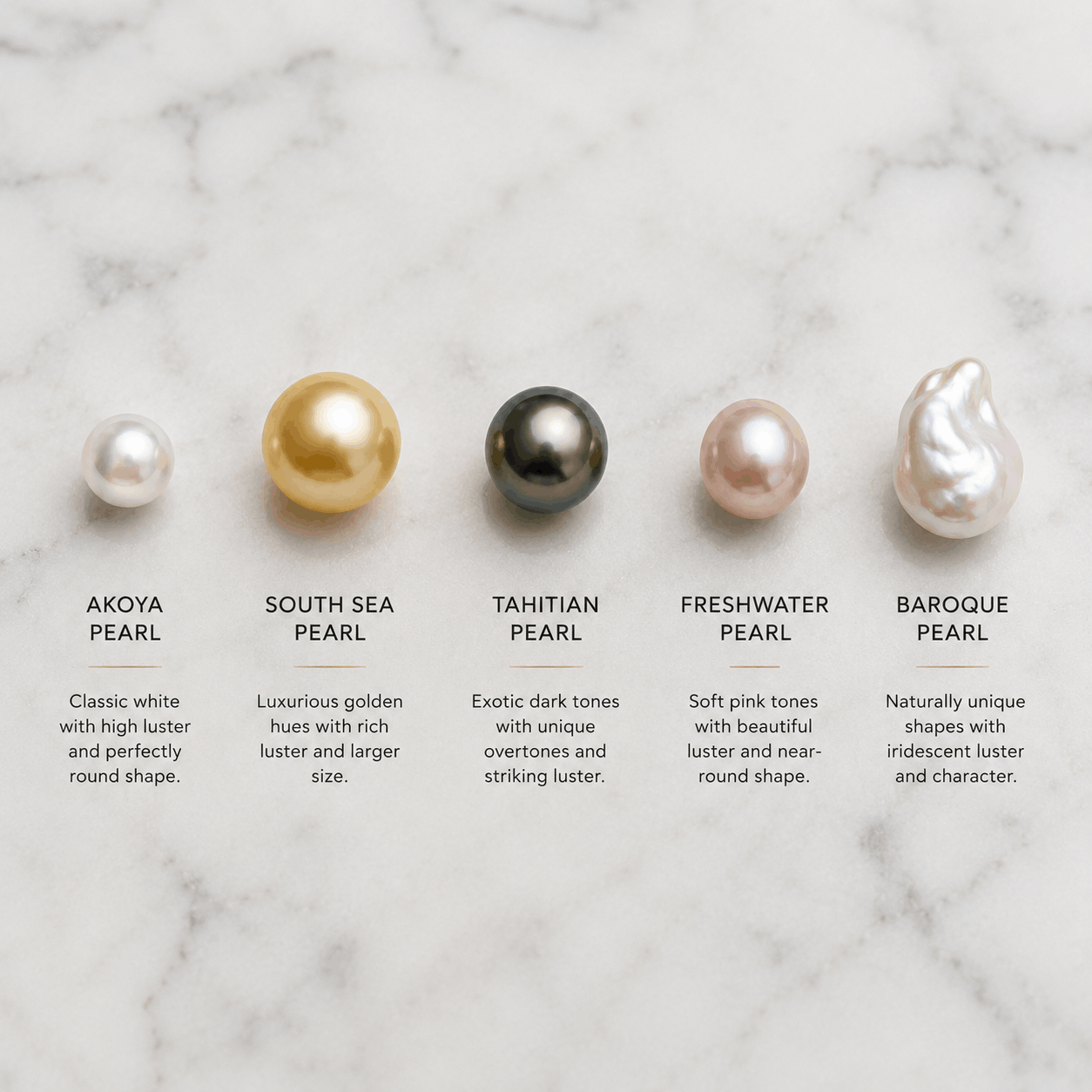
Freshwater pearls are appreciated for their versatility, broad colour range and accessible price points. Saltwater pearls, meanwhile, include some of the most recognisable varieties in fine jewellery, such as the luminous white Akoya, the naturally dark Tahitian and the prestigious South Sea pearl.
Understanding these differences makes it easier to appreciate what gives each pearl its individual appeal and choose a piece that reflects your personal taste.
✨ Explore Freshwater Pearls vs. Saltwater Pearls
Speak with our team on WhatsApp
or Book a private consultation in Hong Kong
1. Freshwater Pearls: Colour, Versatility and Modern Cultivation
Freshwater pearls are primarily cultivated in lakes, ponds and rivers, with China leading global production. They are produced by freshwater mussels, particularly species of the Hyriopsis genus.
Traditionally, freshwater pearls were known for their irregular shapes and softer lustre. However, improvements in cultivation techniques over the past two decades have significantly expanded their possibilities. Modern freshwater pearls can be larger, rounder and more lustrous than earlier generations.
Colour, Lustre and Orient
One of the most appealing characteristics of freshwater pearls is their wide colour range.
Beyond classic white, they can naturally display soft shades of pink, peach, purple, lavender and yellow. Their lustre varies from a gentle, satiny glow to a brighter, more reflective appearance.
Some high-quality specimens also exhibit overtones: subtle secondary colours that appear across the pearl's main bodycolour.
In certain pearls, an optical phenomenon known as orient creates a delicate rainbow-like iridescence. This effect develops as light interacts with the pearl's layers of nacre, producing additional depth and visual complexity.
How Are Freshwater Pearls Cultivated?
Freshwater pearls are generally produced using two cultivation methods: tissue nucleation and bead nucleation.
Tissue-nucleated freshwater pearls
In tissue nucleation, a small piece of mantle tissue is inserted into the mussel to initiate pearl formation. The mollusk then secretes layers of nacre around the implanted tissue.
These pearls are often composed almost entirely of nacre rather than containing a solid shell bead at their centre.
This structure contributes to several desirable characteristics:
-
A solid nacre composition.
-
A soft, layered appearance.
-
Good resistance to chipping compared with pearls containing a bead nucleus, although durability still depends on nacre quality and surface condition.

Bead-nucleated freshwater pearls
In bead nucleation, a round shell bead is inserted alongside mantle tissue. The mollusk gradually coats the nucleus with nacre.
This technique has become increasingly common in modern freshwater pearl cultivation. It can produce larger pearls with rounder and more consistent shapes.
Size and the Rise of Edison Pearls
Freshwater pearls commonly range from approximately 6 to 12 millimetres, although their size varies according to cultivation techniques and growth time.
One particularly interesting development is the emergence of Edison pearls.
Edison pearls are bead-nucleated freshwater pearls known for their larger dimensions, strong lustre and vibrant colours. They can measure approximately 11 to 16 millimetres or more, placing them in a size range that can rival some Tahitian and South Sea pearls.
Their colours may include white, metallic pink, peach and purple, making them especially appealing to those who appreciate distinctive pearl jewellery.
By combining modern cultivation techniques with freshwater farming, Edison pearls demonstrate how far freshwater pearl production has evolved.

✨ Explore Freshwater Pearls vs. Saltwater Pearls
Speak with our team on WhatsApp
or Book a private consultation in Hong Kong
2. Saltwater Pearls: Three Iconic Varieties
Saltwater cultured pearls are cultivated in marine environments and include three particularly well-known varieties: Akoya, Tahitian and South Sea pearls.
Each type is associated with particular mollusks and geographical regions, resulting in distinctive characteristics that appeal to different jewellery preferences.
Akoya Pearls: The Classic Expression of Elegance
Akoya pearls are perhaps the most familiar type of pearl in traditional fine jewellery. Recognised for their round shapes and bright, mirror-like lustre, they are especially popular in classic pearl necklaces and matching earring sets.
Colour, Lustre and Overtones
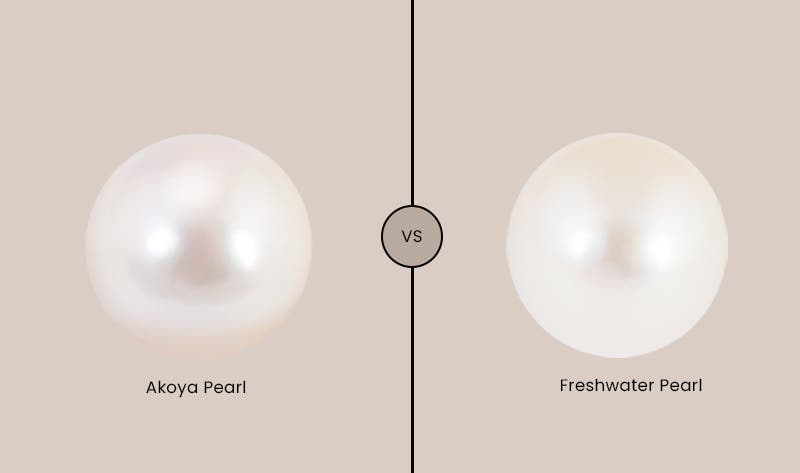
Akoya pearls are best known for their white bodycolour and sharp surface reflection.
Unlike the softer, satiny appearance sometimes seen in freshwater pearls, high-quality Akoya pearls can exhibit a crisp, reflective glow that gives them their signature brilliance.
Their overtones add another dimension to their appearance. Rose or rosé overtones create a subtle pinkish warmth, while some Akoya pearls naturally display blue bodycolours with silvery-grey tones and cooler overtones.
These blue Akoya pearls offer a distinctive alternative to traditional white strands.
Cultivation and Nacre
Akoya pearls are produced by the saltwater oyster Pinctada fucata.
They are bead-nucleated, meaning a round shell bead and a piece of mantle tissue are inserted into the oyster to initiate pearl formation. The oyster then deposits successive layers of nacre around the nucleus.
During cultivation:
-
Each oyster typically produces one pearl at a time.
-
Cultivation generally takes approximately 10 to 24 months.
-
The developing nacre layers contribute to the pearl's characteristic reflective lustre.
Their relatively fine nacre structure is an important factor in the crisp appearance associated with quality Akoya pearls.
Size
Akoya pearls typically measure approximately 6 to 9 millimetres.
Larger specimens exceeding 9 millimetres are less common and can command higher prices. Their more modest dimensions contribute to their refined appearance, particularly in traditional necklaces where roundness and matching are important.
Hanadama: Exceptional Akoya Quality
Hanadama, meaning "flower pearl", is a historical Japanese trade term associated with particularly high-quality Akoya cultured pearls.
The designation refers to pearls that meet demanding standards for lustre, nacre quality, surface appearance and matching.
On qualifying GIA Pearl Classification Reports, a Hanadama comment may be included for Akoya cultured pearls meeting the relevant criteria.
These pearls are expected to demonstrate:
-
Round to near-round shapes.
-
White bodycolour, with or without overtones.
-
Excellent lustre.
-
Excellent to Very Good nacre quality and matching for pairs or strands.
-
Clean to slightly spotted surfaces.
For collectors and pearl enthusiasts, Hanadama represents an important quality distinction within the Akoya category.

Where Are Akoya Pearls Grown?
Akoya pearls are cultivated primarily in Japan, Vietnam and China. Japan holds a particularly important place in the history of modern cultured pearl production.
One point worth remembering is that the term "Freshwater Akoya" can be misleading. Certain freshwater pearls are marketed under this name despite not being genuine Akoya pearls. The GIA has specifically addressed this terminology in its educational article, Freshwater Akoyas: A Trending Misnomer for Certain Pearls.
Tahitian Pearls: The Beauty of Naturally Dark Colours
Often called black pearls, Tahitian pearls are celebrated for their naturally dark bodycolours and colourful overtones.
However, they are not simply black. Their appearance can range from charcoal grey and silver to green and brown, with some of the most beautiful specimens displaying remarkable colour combinations.
Colour, Lustre and Overtones
The appeal of Tahitian pearls lies in the complexity of their colour.
Common bodycolours include:
-
Charcoal grey.
-
Silver.
-
Green.
-
Brown.
High-quality specimens may display secondary hues of blue, green, purple, pink or bronze, creating a rich, almost metallic-looking appearance.
Some recognised colour descriptions include:
-
Cherry: Pink to magenta overtones.
-
Peacock: A combination of green with hints of rose or purple, particularly prized for its depth and complexity.
-
Aubergine: Deep purple overtones.
Their lustre can range from bright and reflective to soft and satiny, depending on the pearl's individual characteristics.
✨ Explore Freshwater Pearls vs. Saltwater Pearls
Speak with our team on WhatsApp
or Book a private consultation in Hong Kong
Cultivation and Growth
Tahitian pearls are produced by Pinctada margaritifera, commonly known as the black-lipped oyster.
They are bead-nucleated and generally take approximately 18 to 24 months to cultivate. Each oyster typically produces one pearl at a time.
The dark inner shell of the oyster is associated with the distinctive bodycolour of Tahitian pearls.
Size
Tahitian pearls commonly measure approximately 8 to 14 millimetres.
Larger specimens exceeding 14 millimetres are less common and can command higher prices, particularly when they combine a round shape, smooth surface and attractive colour.
Longer cultivation periods allow pearls to grow larger, but they can also increase the likelihood of surface irregularities. This makes large, round Tahitian pearls with excellent surface quality especially desirable.
Where Are Tahitian Pearls Grown?
Tahitian pearls are cultivated primarily in French Polynesia, particularly in the lagoons surrounding Tahiti and its neighbouring islands.
Their limited geographical production and relatively restricted supply contribute to their distinctive position in the cultured pearl market.
South Sea Pearls: Another Important Saltwater Category
South Sea pearls are another major variety of saltwater cultured pearls, cultivated in Australia and Southeast Asia.
Alongside Akoya and Tahitian pearls, they form one of the principal categories buyers encounter when exploring fine cultured pearl jewellery.
The supplied reference identifies South Sea pearls as a distinct saltwater variety, although it does not provide sufficient detail on their colours, dimensions, cultivation periods or specific mollusk species for a complete technical comparison.
For buyers considering South Sea pearls, these characteristics should be evaluated individually rather than assumed from the category name alone.
3. Freshwater vs. Saltwater Pearls: A Side-by-Side Comparison
Although both freshwater and saltwater pearls are formed through the natural secretion of nacre, their origins and cultivation methods create meaningful differences.
| Characteristic | Freshwater | Saltwater |
|---|---|---|
| Growing environment | Lakes, ponds and rivers | Marine environments |
| Main varieties discussed | Traditional freshwater, Edison | Akoya, Tahitian, South Sea |
| Cultivation methods | Tissue-nucleated and bead-nucleated | Bead-nucleated in the varieties discussed |
| Production | Multiple pearls can be produced by a mussel | Typically one pearl per oyster at a time |
| Colour range | White, pink, peach, purple, lavender and yellow | Depends on variety; white Akoya and dark Tahitian are notable examples |
| Typical size | Commonly 6–12 mm; Edison can reach 11–16 mm or more | Akoya 6–9 mm; Tahitian 8–14 mm |
| Market positioning | Broad availability and accessible price points | Varies by pearl type, quality and supply |
The most important distinction is that freshwater and saltwater are not simply different names for different pearl colours or sizes. They refer to different cultivation environments and mollusks.
A large freshwater pearl can rival the size of a saltwater pearl, but size alone does not establish its origin or overall quality.
4. How to Choose Quality Pearls
Choosing a beautiful pearl involves more than selecting a preferred colour or size. Two pearls of similar dimensions can look very different depending on their lustre, surface condition, shape and nacre quality.
When evaluating pearls, it is important to consider the overall appearance rather than relying on a single characteristic.
Understand the GIA 7 Pearl Value Factors™
The GIA 7 Pearl Value Factors™ provide a framework for understanding the characteristics used to evaluate pearls.
These factors are particularly useful when comparing pearls across different varieties, as they encourage a more complete assessment of their appearance and quality.
Rather than judging a pearl by size or colour alone, buyers should consider how its individual characteristics work together.
For an informed purchase, it is also worth understanding the difference between a pearl's natural bodycolour and its overtones, as well as how lustre and surface quality influence its visual appeal.
✨ Explore Freshwater Pearls vs. Saltwater Pearls
Speak with our team on WhatsApp
or Book a private consultation in Hong Kong
Why GIA Pearl Reports Matter
When purchasing a valuable pearl, reliable identification and documentation can provide additional confidence.
GIA offers pearl-related reporting services, including the GIA Pearl Classification Report. For qualifying Akoya cultured pearls, a Hanadama comment may be included when the relevant criteria are met.
A report can help buyers understand the pearl being evaluated and support a more informed purchasing decision.
For anyone considering a significant pearl purchase, professional assessment is a valuable part of the process.
5. Which Pearls Are Right for You?
There is no single pearl variety that suits everyone. The right choice depends on the colour, appearance, design and price range you prefer.
Choose Freshwater Pearls if you appreciate versatility.
Their broad range of colours, cultivation methods and accessible price points makes them suitable for a variety of jewellery designs. Modern Edison pearls are particularly interesting if you prefer larger pearls with vibrant colours.
Choose Akoya Pearls if you love timeless elegance.
Their round shapes and crisp, reflective lustre make them a classic choice for traditional pearl necklaces, earrings and refined everyday jewellery.
Choose Tahitian Pearls if you prefer distinctive colour.
Their naturally dark bodycolours and colourful overtones create a more individual appearance, particularly for those who appreciate unusual gemstone-like colour combinations.
Explore South Sea Pearls if you are considering another major saltwater variety.
Their established place in fine pearl jewellery makes them an important category to explore with a knowledgeable jeweller, particularly when comparing individual pearls and their documented characteristics.

Discover the Beauty of Pearls with Mangrove Diamonds
Pearls offer a remarkable combination of natural beauty, individuality and timeless appeal. From the soft pastel colours of freshwater pearls to the reflective brilliance of Akoya and the dramatic tones of Tahitian pearls, each variety brings something different to fine jewellery.
At Mangrove Diamonds, we believe that choosing a gemstone should begin with understanding its qualities and how they align with your personal preferences. Whether you are drawn to classic pearl elegance or a more distinctive design, careful gemstone selection and thoughtful craftsmanship help create jewellery worth treasuring.
Explore our jewellery collection or speak with our team about our custom jewellery service.
Discover the pearl that speaks to your style. Visit Mangrove Diamonds to explore fine jewellery and personalised design possibilities.
Final Thoughts
Freshwater and saltwater pearls each have their own characteristics, shaped by the mollusks that produce them and the environments in which they grow.
Freshwater pearls stand out for their versatility, broad colour selection and evolving cultivation techniques. Saltwater varieties offer distinct identities, from the classic brilliance of Akoya to the naturally dark colours of Tahitian pearls and the established appeal of South Sea pearls.
Ultimately, the beauty of a pearl is not determined by its origin alone. Its lustre, surface quality, shape, colour and overall harmony all contribute to its appeal.
Understanding these differences allows you to appreciate pearls beyond their appearance and make a more confident choice when selecting a meaningful piece of jewellery.
Further Reading
For more information about pearl identification and quality, explore the Gemological Institute of America's educational resources: