

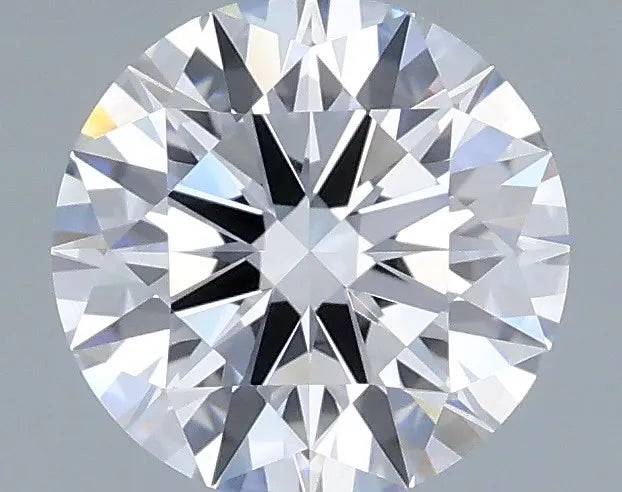
CVD vs HPHT Lab-Grown Diamonds: What’s the Difference?
If you are shopping for a lab-grown diamond, you will eventually encounter two terms: CVD and HPHT.
At first, they can sound like two completely different types of gemstone. They are not.
Both CVD and HPHT lab-grown diamonds are real diamonds, made from carbon and crystallized into the same diamond structure found in natural stones. The difference is the technology used to grow them.
HPHT recreates some of the extreme pressure and temperature conditions associated with diamond formation deep inside the Earth. CVD takes a very different approach, growing diamond layer by layer from carbon-containing gas inside a low-pressure chamber. (GIA 4Cs)
So which is better?
The short answer is: neither method automatically produces a better diamond.
What matters is the finished stone—its cut, color, clarity, carat weight, proportions and overall appearance.

What Does “Lab-Grown Diamond” Actually Mean?
A lab-grown diamond is not a diamond imitation.
It is diamond material created through a controlled technological process rather than geological formation.
Natural diamonds formed deep within the Earth over enormous periods of geological time. Laboratory-grown diamonds are created much faster, using a diamond seed as the starting point for crystal growth.
The two principal methods are:
-
HPHT — High Pressure High Temperature
-
CVD — Chemical Vapor Deposition
GIA explains that laboratory-grown diamonds have essentially the same chemical composition, crystal structure, optical properties and physical properties as natural diamonds. (GIA 4Cs)
That distinction is important because terms such as lab-grown, synthetic and simulant are sometimes incorrectly used interchangeably.
A CVD or HPHT diamond is not a simulant.
Cubic zirconia and moissanite are different materials that imitate the appearance of diamond. CVD and HPHT diamonds are actually diamond. (gia)
Book a Private Consultation in Hong Kong
or
Chat with our diamond specialists on WhatsApp
How Are HPHT Diamonds Made?
HPHT is the more intuitive of the two methods because it deliberately recreates some of the conditions associated with natural diamond formation.
Think of it as creating a highly controlled miniature diamond-growth environment.
Step 1: Start With a Diamond Seed
A small piece of diamond acts as the foundation for the new crystal.
This seed provides the crystal structure that guides the formation of additional diamond material.
Step 2: Add a Carbon Source
A solid carbon source, commonly graphite, is placed inside a specialized growth capsule along with a metallic flux.
The flux helps dissolve the carbon and transport it toward the diamond seed. (gia)
Step 3: Apply Extreme Pressure and Heat
The capsule is placed inside an HPHT press.
Pressure reaches approximately 5–6 GPa, equivalent to pressures associated with roughly 150–190 km beneath Earth's surface.
Temperatures are typically around 1,300–1,600°C. (GIA 4Cs)
Step 4: Carbon Crystallizes Onto the Seed
Under these conditions, carbon dissolves into the metallic solution.
Because the diamond seed is maintained at a lower temperature, the solution becomes supersaturated with carbon around it. Carbon then crystallizes onto the seed, progressively creating a larger diamond crystal.
Step 5: Remove and Cut the Crystal
Once growth is complete, the rough laboratory-grown diamond can be removed, processed and eventually cut and polished into a gemstone.
Depending on the desired size and quality, HPHT growth can take from approximately an hour to several weeks. (gia)
The resulting rough crystal has a characteristic growth morphology that can help gemologists identify it as HPHT-grown.
How Are CVD Diamonds Made?
CVD takes almost the opposite approach.
Instead of recreating enormous geological pressure, the process takes place at very low pressure inside a vacuum chamber.
Step 1: Place Diamond Seeds in a Chamber
Thin diamond seed plates are placed inside a specialized CVD reactor.
These seeds provide the crystal structure on which new diamond material can grow.
Step 2: Introduce Carbon-Containing Gas
The chamber is filled with a mixture of gases, typically hydrogen and a carbon-containing gas such as methane.
Hydrogen plays an important role by helping suppress the formation of graphite and other non-diamond carbon. (gia)
Step 3: Create a Plasma
Microwaves activate the gas mixture, creating a glowing plasma.
The energy breaks down the gas molecules and creates carbon-containing species that can move toward the diamond seed.
Step 4: Deposit Carbon Layer by Layer
Carbon atoms gradually deposit onto the diamond seed and reproduce its crystal structure.
Unlike HPHT, CVD growth ideally progresses layer by layer, producing a characteristic tabular or plate-like rough crystal. (GIA 4Cs)
Step 5: Process and Polish
The rough crystal is removed from the chamber and processed.
Some CVD-grown crystals initially have brown coloration or non-diamond carbon on their surfaces. Additional processing or HPHT annealing can be used to improve their color before cutting. (gia)
This is an important detail when comparing CVD vs HPHT lab grown diamonds: a diamond can be CVD-grown but later receive HPHT treatment. HPHT treatment and HPHT growth are not the same process. (gia)
CVD vs HPHT Lab-Grown Diamonds: The Key Differences
|
Feature |
HPHT |
CVD |
|
Full name |
High Pressure High Temperature |
Chemical Vapor Deposition |
|
Growth environment |
Extremely high pressure and temperature |
Low-pressure vacuum chamber |
|
Carbon source |
Usually solid carbon such as graphite |
Carbon-containing gas |
|
Typical temperature |
~1,300–1,600°C |
~700–1,200°C |
|
Growth structure |
Crystal grows from carbon dissolved in metallic flux |
Layer-by-layer deposition |
|
Typical rough shape |
Often cuboctahedral/cubic-octahedral morphology |
Often tabular or plate-like |
|
Possible inclusions |
Metallic flux inclusions |
Graphite or other growth-related inclusions |
|
Post-growth treatment |
May be grown or treated using HPHT |
Often may receive post-growth HPHT treatment |
|
Final material |
Diamond |
Diamond |
These differences are primarily differences in how the crystal grows, not evidence that one is a “real” diamond and the other is not. (gia)

Are CVD and HPHT Diamonds Real Diamonds?
Yes.
This is perhaps the most important point in the entire CVD vs HPHT discussion.
Both are composed of carbon atoms arranged in the diamond crystal structure.
Both have the defining physical properties of diamond.
And both have a Mohs hardness of 10.
The fact that the atoms were assembled in a laboratory rather than deep within the Earth does not turn the resulting material into cubic zirconia or another imitation.
GIA specifically distinguishes laboratory-grown diamonds from diamond simulants because simulants have different chemical and physical properties. (gia)
The difference is therefore primarily origin, not whether the material is diamond.
CVD vs HPHT vs Natural Diamond
The easiest way to understand the relationship is to think of three different origins:
Natural Diamond
Carbon crystallizes naturally deep inside the Earth over geological timescales.
HPHT Diamond
Carbon crystallizes in a laboratory under extremely high pressure and temperature.
CVD Diamond
Carbon-containing gases are broken down in a controlled chamber and deposited onto a diamond seed.
The resulting crystals are all diamond.
What changes is the growth history.
That history leaves subtle clues in the crystal, which is why sophisticated gemological laboratories can distinguish natural, HPHT-grown and CVD-grown diamonds.
GIA notes that HPHT and CVD diamonds have different growth morphologies and different identification criteria. (gia)
Book a Private Consultation in Hong Kong
or
Chat with our diamond specialists on WhatsApp
Why Can't You Tell CVD and HPHT Diamonds Apart by Eye?
Once cut and polished, a CVD or HPHT diamond can look remarkably similar to a natural diamond.
This is because the finished gemstone has the same fundamental optical properties responsible for diamond's brilliance, fire and scintillation.
Even experienced professionals cannot reliably determine a diamond's origin simply by looking at it.
Instead, laboratories examine features created during the growth process.
For HPHT diamonds, these can include:
-
Geometric color zoning
-
Metallic flux inclusions
-
Characteristic fluorescence patterns
-
Certain growth structures
-
Particular strain characteristics
CVD diamonds can show:
-
Banded strain patterns
-
Distinctive fluorescence patterns
-
Dark graphite-related inclusions
-
Characteristic growth structures
Not every diamond displays every feature, however. GIA emphasizes that multiple diagnostic observations and advanced instruments may be necessary for reliable identification. (gia)
Does CVD or HPHT Produce Better Color and Clarity?
There is no simple rule saying that one process always produces better diamonds.
Modern technology has advanced significantly, and both methods can produce high-quality gem diamonds.
CVD diamonds, for example, have evolved dramatically over the past two decades. GIA reports that the quantity, size and quality of CVD-grown gem diamonds have increased substantially. (gia)
At the same time, HPHT technology can produce impressive colorless, near-colorless and fancy-color diamonds.
What matters to the buyer is the finished diamond, not simply the growth method.
A well-cut CVD diamond can be more attractive than a poorly cut HPHT diamond.
And an exceptional HPHT diamond can outperform a mediocre CVD stone.
This is why the 4Cs remain important when shopping for either type.

Can a CVD Diamond Be Treated With HPHT?
Yes—and this is one of the most confusing aspects of laboratory-grown diamonds.
CVD growth and HPHT treatment are separate concepts.
A diamond can initially be grown using CVD and later undergo HPHT annealing to modify its color.
GIA reports that many CVD diamonds submitted to its laboratories have undergone post-growth processing, with approximately 80% of CVD diamonds submitted since 2020 showing evidence of post-growth processing. (gia)
So when you see “CVD diamond”, it refers to the diamond's growth method.
It does not necessarily mean that the stone has never experienced high pressure and high temperature after growth.
Likewise, an HPHT-grown diamond is not necessarily untreated.
For buyers, certification and full disclosure are therefore important.
Book a Private Consultation in Hong Kong
or
Chat with our diamond specialists on WhatsApp
CVD vs HPHT: Which One Should You Buy?
If you're deciding between a CVD and HPHT diamond, don't choose based solely on the acronym.
Instead, compare the individual stones.
Look at:
1. Cut
Cut has a major influence on how efficiently a diamond interacts with light.
2. Color
D–F diamonds are considered colorless, while G and beyond move gradually into near-colorless ranges.
3. Clarity
Compare inclusions rather than simply chasing the highest grade. A well-positioned VS diamond can look exceptionally clean to the naked eye.
4. Carat
Choose the size that fits your design and budget.
5. Certification
A reputable laboratory report provides important information about the diamond and its laboratory-grown origin.
6. Price
Compare individual diamonds with similar specifications rather than assuming all CVD or all HPHT diamonds should have the same price.

CVD vs HPHT: What About Moissanite and Cubic Zirconia?
This is where the terminology becomes particularly important.
Moissanite is not diamond.
It is silicon carbide.
Cubic zirconia is not diamond.
It is zirconium dioxide.
Both are diamond simulants because they can visually resemble diamond, but they have different chemical compositions and physical properties.
CVD and HPHT diamonds are fundamentally different.
They are created using different growth technologies, but the resulting material is diamond.
GIA explicitly states that calling laboratory-grown diamonds “imitations” or “simulants” is incorrect. (gia)
So the comparison should really be:
CVD vs HPHT = two ways of growing diamond
Moissanite vs diamond = two different gemstone materials
Cubic zirconia vs diamond = two different gemstone materials
That distinction matters when you're buying jewellery.
The Bottom Line: CVD vs HPHT Lab-Grown Diamonds
CVD and HPHT represent two very different approaches to creating the same extraordinary material.
HPHT uses extreme pressure and temperature to recreate some of the conditions associated with natural diamond formation.
CVD uses carbon-containing gases, plasma and controlled deposition to build diamond progressively on a seed.
Both can produce genuine diamonds with the fundamental chemical, physical and optical characteristics of diamond. (GIA 4Cs)
The growth method does matter for identification, because CVD and HPHT diamonds can retain distinctive clues from their formation.
But from the perspective of the person wearing the finished gemstone, the more important questions are:
How well is it cut?
What color and clarity does it have?
How large is it?
Is it properly certified and disclosed?
And ultimately:
Does it look beautiful to you?
For buyers who want to explore both technologies rather than choosing based on a label alone, comparing actual stones is the best approach.
Search CVD & HPHT Diamonds by Cut & Carat
Explore Mangrove Diamonds and compare laboratory-grown diamonds by cut, carat, color, clarity and shape to find the stone that best fits your budget and design.
Search CVD & HPHT Diamonds by Cut & Carat
For additional independent education on how CVD and HPHT diamonds are grown and identified, see GIA: HPHT and CVD Diamond Growth Processes.
閱讀更多
GIA vs IGI Lab-Grown Diamond Certificates: What Hong Kong Buyers Need to Know
If you are searching for a GIA certified lab grown diamond in Hong Kong, the certificate can sometimes feel almost as important as the diamond itself. But a grading report is not simply a stamp tha...
閱讀更多
Engagement Ring Guide: How to Design a Custom Lab-Grown Engagement Ring in Hong Kong
Designing an engagement ring should feel personal from the very beginning. Instead of choosing a finished ring from a display case, a bespoke engagement ring in Hong Kong allows you to start with t...
閱讀更多